
In the highly competitive skincare and dermo-cosmetic industry, claims of “sebum regulation” and “anti-inflammatory properties” are common. However, truly differentiating an innovative active ingredient requires moving past basic instrumental measurements.
When Complife scientific team set out to evaluate the clinical efficacy of a standardized Opuntia ficus-indica flower extract, the objective was to move beyond standard sebumetry alone. To prove how this botanical ingredient fundamentally rebalances hyperactive sebaceous glands, Complife experts designed a rigorous, randomized, double-blind clinical trial. Crucially, the company coupled traditional biophysical measurements with cutting-edge multi-omic methodologies, specifically lipidomics and skin microbiome sequencing.
The findings, published in Cosmetics – 13(1), 37, provide a definitive blueprint for how advanced biological analyses can substantiate valid, safe, and highly effective cosmetic claims.
Moving Beyond the Surface: The Power of Lipidomics
Traditional cosmetic testing tracks the total quantity of sebum. While essential, this metric fails to assess how a product alters the skin’s lipid chemistry. Sebum dysregulation is not merely a quantitative problem of overproduction; it is a qualitative problem characterized by altered lipid profiles, which often trigger skin barrier degradation and localized inflammation.
To explore this, Complife experts deployed lipidomic profiling to capture a comprehensive map of the skin’s surface lipids before and after a 28-day treatment protocol. The lipidomic analysis demonstrated that the treatment induced distinct remodeling of the skin lipid profile. While the extract significantly minimized excessive sebaceous output, it simultaneously triggered a strategic upregulation of ceramides and triacylglycerols.
Ceramides are crucial elements of the stratum corneum’s lipid matrix, acting as the structural mortar that locks in hydration and prevents the entry of external irritants. Furthermore, the increase in specific triradylglycerol species points to an active modulation of sebaceous lipid synthesis. By leveraging lipidomics, it was demonstrated that this extract does not strip the skin, instead, it selectively modulates lipid synthesis, achieving a “restoring mechanism” that actively reduces excess sebaceous output while enhancing the skin’s structural lipids.
Preserving Ecosystem Integrity: Microbiome Sequencing
Human skin is a living, breathing ecosystem home to billions of microorganisms. A major risk with any potent sebum-regulating or anti-inflammatory active is accidental antimicrobial disruption. Stripping away the skin’s natural sebum can dramatically alter the niche environments of resident microbes, causing dysbiosis that may lead to opportunistic flare-ups or irritation.
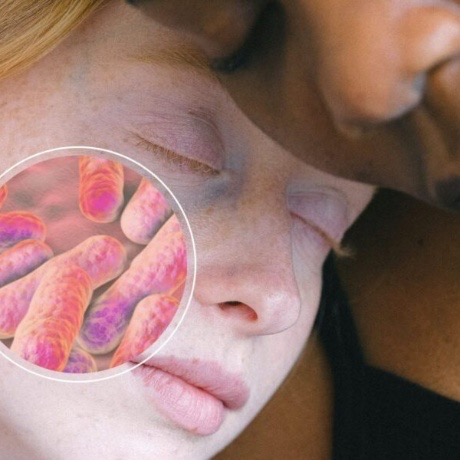
To ensure the active ingredient was biocompatible, Complife performed high-throughput skin microbiome sequencing. Rather than relying on techniques that only capture a fraction of surface bacteria, modern metagenomic sequencing allowed researchers to track the entire microbial community composition and relative abundance throughout the trial.
The results confirmed that the Opuntia ficus-indica extract exhibits an impeccable safety profile. Even as sebum levels dropped sharply, the overall composition and diversity of the skin microbiome remained stable. This advanced microbiological proof is a vital selling point for brands who view barrier support and microbiome preservation as non-negotiable pillars of skin health.
Quantum-Leap Visual and Physiological Results
By pairing these deep-level biological analyses with standard instrumental metrics, Complife also built a comprehensive, multidimensional data narrative. The clinical data confirmed that twice-daily topical application of the product granted benefits over 14 and 28 days:
- Substantial Sebum Reduction: Skin sebum content fell by up to 21.1% on the forehead and 15.8% in the alar groove, complemented by a remarkable 37.2% reduction in the Sebum Excretion Rate (SER).
- Extended Mattifying Effect: Participants enjoyed a continuous mattifying effect that lasted up to 7.1 hours post-application.
- Refined Pore Architecture: High-resolution imaging confirmed a 9.6% reduction in visible pore size, a direct cosmetic consequence of reduced sebaceous gland volume.
- Targeted Anti-Inflammatory Action: Local biochemical changes were tracked by measuring Tumor Necrosis Factor-alpha (TNF-α) levels. The extract drove a 7.4% reduction in this critical pro-inflammatory cytokine, verifying its ability to soothe the micro-inflammation typically associated with oily skin types


The New Standard in Ingredient Substantiation
This study represents more than a successful research; it is a testament to Complife’s commitment to rigorous, advanced scientific methodologies. By integrating lipidomics, microbiome sequencing, and cytokine tracking into a double-blind human clinical framework, it was possible not only to observe that the tested product worked, but also to map exactly how it worked.
As the dermo-cosmetic field moves into an era dominated by clean beauty, biotechnology, and personalized skin health, surface-level testing is no longer sufficient. Complife places the greatest attention on ongoing scientific developments, constantly investing in state-of-the-art instruments and certified sites worldwide to provide its clients with the robust, next-generation data needed to confidently support tomorrow’s market leaders.
Contact