The assessment of the moisturizing effect, a timeless and still widely sought-after cosmetic claim, is based on the study of the biological mechanisms involved in maintaining and supplying water to the stratum corneum. This evaluation relies on instrumental measurements of skin hydration and skin barrier integrity commonly evaluated using validated and widely used methods such as the Corneometer® (C&K), the Tewameter® (C&K), the Epsilon™ (Biox Systems) and the MoistureMap® MM200 (C&K).
This latter instrument generates hydration maps (photos and videos) based on grey-level distribution (0 to 255), derived from measurements of electromagnetic field penetration within the skin.
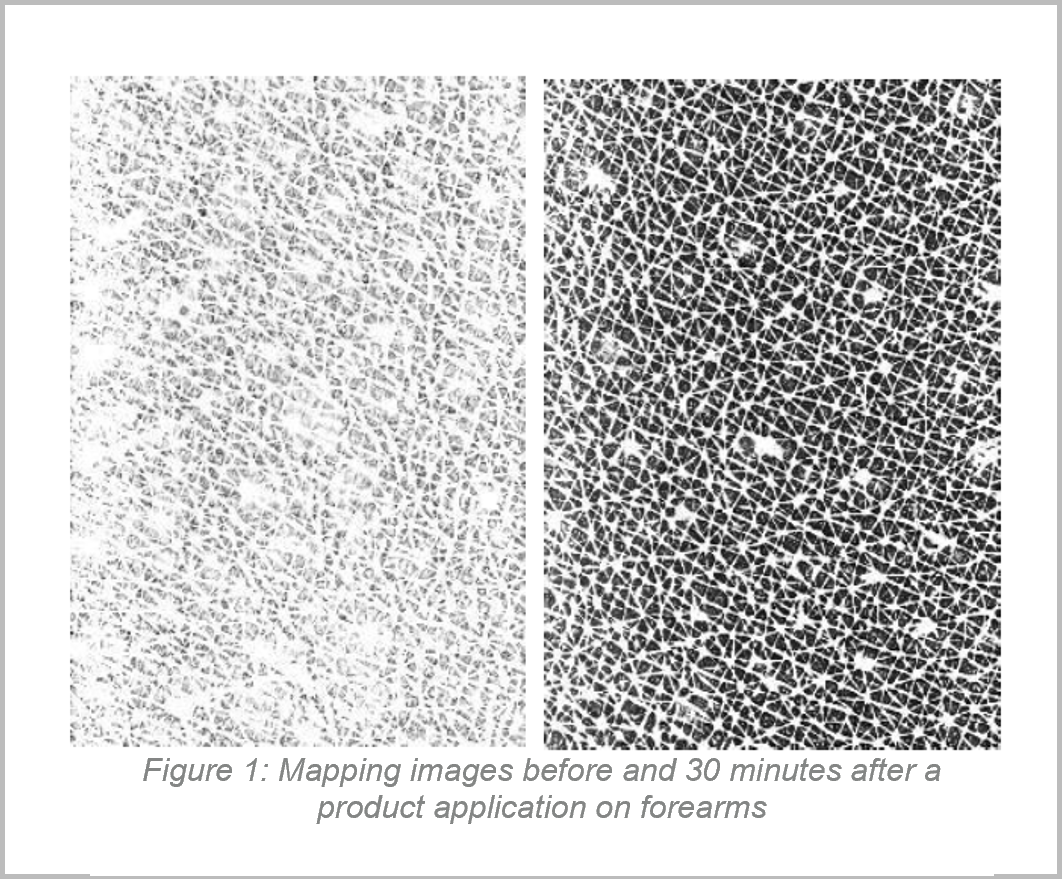
The most commonly studied parameters are as follows:
✓ Grey Index : represents the inverted grey-level index. An increase in this index (darker pixels) indicates an increase in skin hydration
✓ Mean Grey Level (MGL) : corresponds to the average grey. Lower values indicate darker pixels, which are associated with higher skin hydration levels
✓ Homogeneity: reflects the distribution of hydration to assess its uniformity. Higher homogeneity values indicate a more even distribution
✓ Permittivity index (range from 0 to 80): is related to the dielectric constant. The higher it is, the greater the water content.
The device can also evaluate the Topography / anisotropy parameters which can also serve as a marker of skin hydration with the assessment of skin surface relief and cellular organization.
This probe can be used in combination with a TEWL and Corneometer probes to provide a more complete assessment of the hydrating efficacy of a cosmetic product.
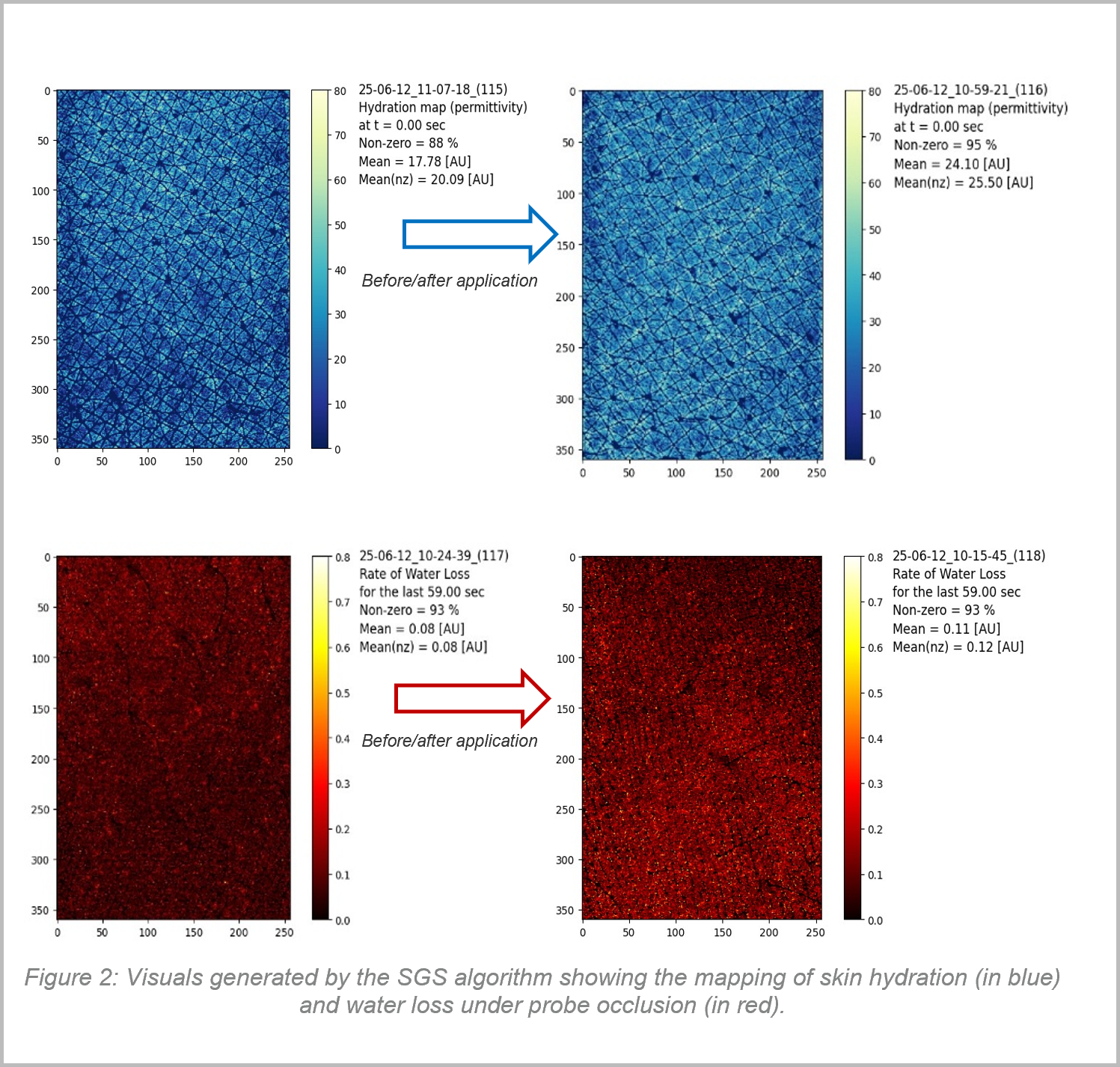
SGS has developed an innovative algorithm, subject of a patent application, designed to be integrated with the
MoistureMap MM200 to extend its functionalities and enhance the analysis of skin hydration parameters.
From videos recordings by the device, this algorithm generates images enabling the mapping of skin hydration (in blue) and the assessment of water loss under probe occlusion (in red).
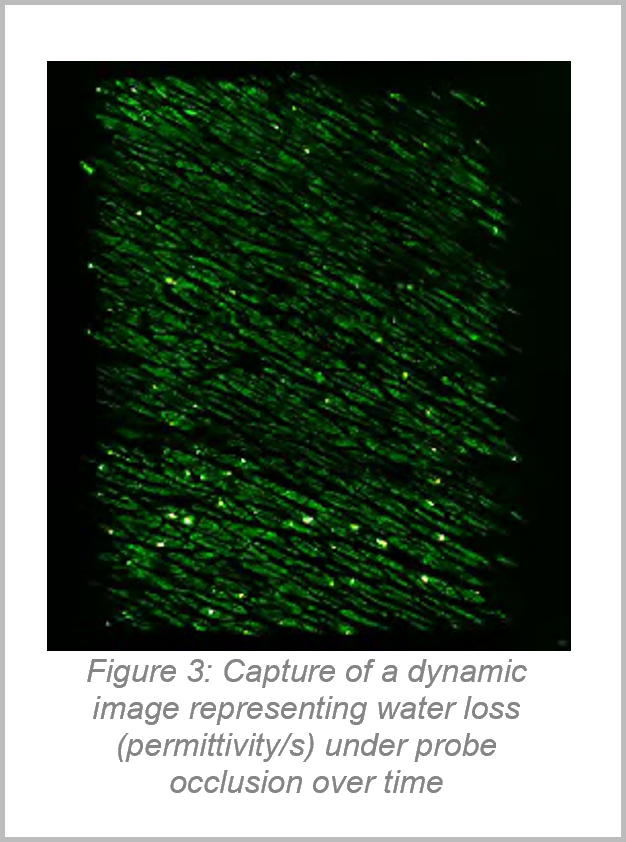
The algorithm also enables the generation of a dynamic image, illustrating the progressive accumulation of water, under probe occlusion, over time through skin permittivity mapping.
Initially designed for the measurement of skin hydration, this device enhanced by this novel algorithm, extends its capabilities to generate comprehensive high-resolution maps of both skin hydration and water loss, a direct marker of skin barrier integrity.
This integrative approach therefore provides a powerful tool for the objective visualization and assessment of the dual impact
CONTACT
https://www.iecfrance.com/contact/
Valentine Camel
04.72.69.77.45