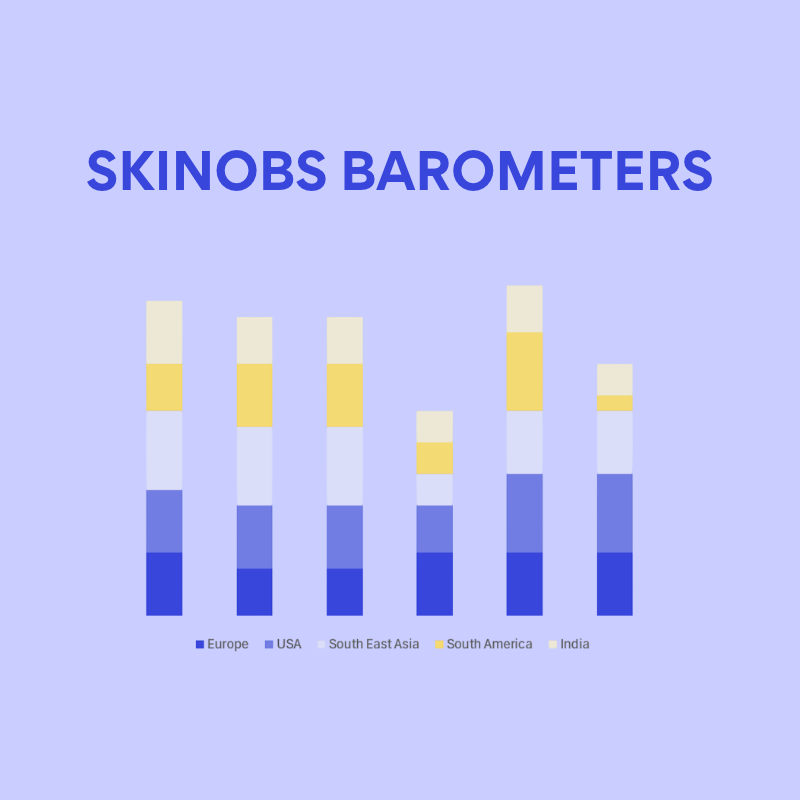
Microbiome claim substantiation is increasingly critical, driving demand for mechanistic analyses of product-host-microbe interactions. Leveraging metagenomics, over 80 global CROs are exploring the cutaneous flora’s genomic landscape. Despite its complexity, deciphering this “living layer” is essential to understanding its functional integration with skin metabolism and homeostatic regulation.
First, we must consider that the skin microbiota does not belong to the epidermis layer of the skin. It is a “foreign” substance of our body:
- 5 acting as a resident of the skin and;
- 5 forming a biofilm at the epidermis surface;
- 5 maintaining the good conditions of the skin and regulating inflammation;
The skin microbiota refers to the collective population of resident microorganisms, whereas the microbiome denotes a functional ecosystem integrating genomic data, structural biomolecules, and metabolic activities. This ecosystem is regulated by host genetics, lifestyle, and physiochemical variables such as pH, temperature, and lipid composition, forming a stable “microbial footprint” essential for immune and barrier functions.
Cutaneous homeostasis relies on high microbial diversity; conversely, dysbiosis—often characterized by the proliferation of opportunistic pathogens, is linked to inflammatory conditions such as acne and atopic dermatitis. Advanced 2D and 3D models are therefore indispensable for elucidating these complex host-microbe interactions and advancing dermatological research.
- 5 protecting the body from the aggressive environmental conditions and various internal stresses.
Various bacteria disorders might be considered as a source of cutaneous dysfunctions like acne, eczema, dandruff or atopic dermatitis modifying this precious balance. The cosmetics search for 3 main benefits:
- 5 the rebalancing, probiotic, prebiotic;
- 5 the probiotic-like;
- 5 the antimicrobial effects.
How to evaluate cosmetics activity on the skin or scalp microbiota
Understanding the interplay between skin, microbes and their variations due to cosmetic application is essential. Cosmetic activity on skin microbiota can be evaluated in different settings, in vitro lab testing, ex vivo and directly from human skin samples.
In vitro tests allow the experimental conditions to be strictly controlled providing a brief snapshot of how the product interacts with isolated bacterium strain by strain or mixed of strains. The assays conducted on 3D skin models such as the full thickness (epidermis and dermis layers) can allow studying the behavioral aspects of bacteria and how tissues react to the presence of these bacteria. This approach offers reliable results while avoiding variations due to the individual differences of each person. However, they do not analyze bacteria within its natural context.
Moreover, since only small fractions of microbes forming the skin microbiota could be cultured using standard techniques, skin microbiome research relied heavily in culture-independent metagenomic analysis. While these methods are highly sensitive and efficient for identifying the composition and relative abundance of microbial communities, they fall short in elucidating molecular interactions and the functional roles of bacterial metabolites in host-microbe dynamics.
A significant advancement in skin microbiome, TUS Skin Bacteria Co-culture medium, introduced by Yamamoto et al. (2024) enabled the in vitro co-culture of four key skin microbes Staphylococcus epidermidis, S. capitis, Cutibacterium acnes, and Corynebacterium by replicating the skin’s natural environment and allowing using microbial species collected from human volunteers in with culture-dependent techniques.
In vivo human testing provides a comprehensive perspective by evaluating the skin microbiota within its physiological context, facilitating essential longitudinal analysis. However, the inherent inter- and intra-individual variability necessitates rigorous study designs and precise population selection. Methodological execution, ranging from invasive biopsies to non-invasive swabbing and emerging at-home self-sampling kits, must be standardized to ensure data integrity. By integrating advanced bioinformatics with controlled comparative protocols (treated versus placebo), researchers can effectively delineate causal relationships and assess a product’s long-term impact on microbial homeostasis and cutaneous health.
Sample processing includes simple quantitative techniques CFU counting, and quantitative methods at molecular level such as qPCR and rRNA gene sequencing which is the most common approach for analysis of composition of microbial communities. rRNA sequencing is based on high-throughput sequencing of PCR amplicons for prokaryotic communities (16S V4, V1-V3), eukaryotic communities (18S), fungal communities (ITS1–2), and archaeal communities (16S V4-V5). While techniques such as PCR provide a fast identification of known sequences, next generation sequencing (NGS) offers a broader insight since it is a hypothesis-free approach providing a tool to detect novel genes with higher sensitivity. Shotgun Metagenomics allow to look at all the genes of all the microorganisms in a sample allowing assessing microbial diversity and detect the abundance of species under different conditions.
While metatransciptomic sequencing employs various NGS platforms to uncover how genes are activated in response to lifestyle, environment & treatment evaluating the effect of a product on the skin-related microbial gene expression. The integration of multiple layers of biological data, including genomics, metabolomics and proteomics also known as multi-omics, provides a more comprehensive understanding of how products impact both the human body and its microbiome. To do so, the exploitation of metadata to perform bioinformatic/biostatistics analysis to delineate potential cause/association with sequencing results of great importance. For example, HolXplore (Phylogene) which is a complementary analysis of data from meta proteomics experiments, allowing highlighting the biological effects associated with the results. Other suppliers that use databases for analyses pipeline include Byome Labs, Sequential, BIO-ME, Viomer Genevolutionand Hellobiome…
Several laboratories have created in-house certifications such as “microbiome-friendly”, “respect the microbiome, “kind to biome” and “maintains the microbiome” to help brands communicate about how their products do not harm the skin microbiome. Each company uses a combination of in vitro and/or in vivo protocols to mainly ensure that a given product does not have a detrimental effect in skin microbiome. At the moment there are no specific global regulations in place for skincare products or ingredients targeting the skin microbiome. However the cosmetics industry has to follow the regulatory for standard cosmetics regarding safety and claims. Hopefully, one day further regulatory approaches will lay the grounds for harmonizing communication in the novel area of cosmetic science.
Combining point of expert’s view on clinical evaluation perspectives
The skin microbiome field has evolved significantly since 2012, yet premium brands remain cautious due to the discipline’s relative infancy. Precise sampling and longitudinal follow-up are hampered by the complex interplay between genetics and lifestyle. Consequently, industry-wide consensus and standardized guidelines are essential to validate claims and prevent misleading consumer communication. A proactive approach is needed, shifting toward routine microbiome impact testing of raw materials during the pre-formulation phase, anticipating future regulatory requirements. Biologically, the skin is a heterogeneous, often hostile environment where microbial niches fluctuate across life stages, particularly during hormonal shifts like puberty. Mature skin hosts approximately 1,000 bacterial species, forming distinct ecosystems that engage in sophisticated crosstalk with host immune and epithelial cells. These interactions are vital for the barrier repair, limiting transepidermal water loss, and antimicrobial defense. However, the specific mechanisms governing these host-microbe dynamics remain largely undeciphered. Advancing this field requires a transition from descriptive diversity studies to rigorous functional analysis. Integrating high-resolution mass spectrometry proteomics and Next Gen Sequencing with dedicated bioinformatics pipelines is critical for mapping metabolic correlations and elucidating the molecular pathways that define skin homeostasis. Ultimately, treating the skin as a diagnostic reservoir will unlock the potential for truly evidence-based, microbiome-centric dermocosmetics.
The future of skin microbiota evaluation
In conclusion, the skin microbiota is characterized by high variability, rendering a universal “ideal” composition elusive. While diversity is essential for homeostasis, the industry is pivoting toward AI-powered, hyper-personalized dermocosmetics to address individual ecological profiles. However, global applicability remains hindered by limited ethnic representation in current datasets. Overcoming this requires integrating 3D organotypic models and standardized pre-market assessments to elucidate host-microbe dynamics. By prioritizing ethnic inclusivity and rigorous functional analysis, the industry can transition the microbiome from a transient marketing claim into a scientifically validated, preventive pillar of future dermatological health and regulatory-compliant product development.
Anne Charpentier CEO
Via Industries Cosmétiques