
Introduction
The hair and scalp constitute a highly specialized biological ecosystem that reflects both local and systemic physiological conditions. As consumer awareness regarding hair health continues to increase, the demand for scientifically validated cosmetic solutions has grown in parallel. Conditions such as androgenetic alopecia, telogen effluvium, dandruff, seborrheic dermatitis, hair fragility, and scalp sensitivity have become key targets for innovation in cosmetic product development.
In this context, CIDP has developed a robust portfolio of haircare studies across in vitro, ex vivo, and in vivo models to support cosmetic companies in substantiating their product claims. Our protocols integrate advanced hair and scalp evaluation methods, combining macro- and dermoscopic imaging, instrumental biometrology, standardized in-center procedures, and dermatologist-led assessments based on validated clinical scales.
Global clinical research and multi-ethnic evaluation
Hair and scalp characteristics exhibit marked variability across ethnic groups, phototypes, curl patterns, sebum profiles, and fiber morphologies, directly influencing both treatment response and cosmetic performance. For this reason, multi-ethnic clinical evaluation is no longer optional, but a strategic requirement for global product development as they help capture real-world biological variability, ensuring that efficacy, tolerance, and safety claims are both robust and globally relevant. Harmonized protocols, standardized instrumental techniques, and unified dermatological evaluations across international sites enable direct comparison of results, enhancing regulatory credibility and market transposability.
At the forefront of this global approach, CIDP leverages its strategic presence in Brazil, India, Mauritius and Romania to recruit volunteers across phototypes I to VI and varied hair types. This global clinical approach not only enhances the scientific quality of efficacy assessments but also supports inclusive product positioning, ensuring that cosmetic innovations deliver consistent performance across different hair types, scalp conditions, and geographic realities.
Our in vitro and ex vivo models
Alongside clinical and instrumental methods, in vitro and ex vivo studies are key to hair research.While our in vitro assays explore follicular cell activity, keratinocyte behavior, pigmentation, and biomarkers such as oxidative stress and protein degradation, providing early insights into ingredient efficacy, we rely on ex vivo models (using natural hair strands from diverse ethnic origins such as Asian, African, Indian and Caucasian) to evaluate fiber resistance, shine, color durability, and responses to environmental stressors like UV radiation and pollution, supported by biochemical marker analysis. The hair strands can be exposed to external stressors such as UV light, air, and water pollution, with subsequent assessment of biomarkers such as malondialdehyde (MDA), free fatty acids, melanin and protein content, and tryptophan degradation.
Insights into CIDP’s in vivo hair testing protocols
CIDP in vivo protocols cover a wide range of hair-care claims, including hair moisture, volume, frizz control, density, thickness, manageability, combing forces, shine, breakage, softness, suppleness, color, curl effect and retention, gloss, hair loss, and hair photoprotection.
With dedicated shampoo stations, we can conduct studies in-house and, depending on client needs, in collaboration with salon experts.
Our study designs combine dermatological assessments with instrumental evaluations such as pH meter, sebumeter, glossymeter, and corneometer measurements, all conducted under controlled temperature and humidity conditions. While these instrumental methods provide highly objective endpoints, clinical evaluation by our dermatologists remains essential—particularly for the scalp, where inflammatory, seborrheic, desquamative, and sensitive conditions frequently overlap. Our dermatologist-led scoring systems ensures standardized assessment of key parameters including erythema, scaling, sebum excess, pruritus, scalp dryness, and overall scalp balance, and can be complemented by trichoscopic imaging.
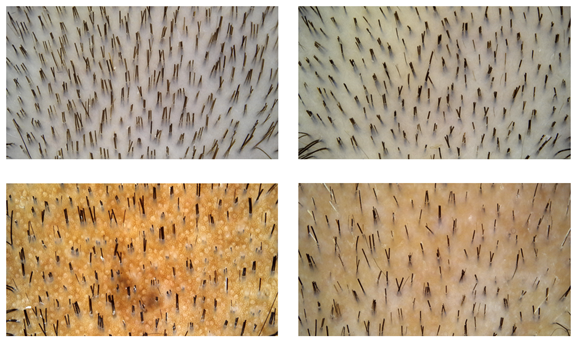
Figure 1: Scalp dermoscopy at standardized 40x magnification reveals pigment network, microscopic erythema and micro desquamation in different phototypes and hair curl types.
Because hair and scalp studies are highly sensitive to environmental and behavioural variability—such as washing frequency, styling habits, brushing, and cosmetic residue—we adhere to strict procedural standardization. This includes controlled investigational product applications at the centre to ensure data reliability. Another key aspect is the careful monitoring of wash-out phases to eliminate interference from previous cosmetic use, particularly residues of silicones, conditioning polymers, and styling agents.
Through our in-center washing protocols, standardized drying procedures, and subsequent evaluations by dermatologists or hair experts, we deliver robust and reliable assessments of scalp and hair attributes.
Instrumental capabilities for hair growth and fiber evaluation
Among the available instrumental techniques, the phototrichogram (PTG) associated with dermoscopy remains one of the most reliable and widely used methods for the quantitative assessment of hair growth and scalp disorders. This non-invasive technique is based on the standardized shaving of a small scalp area, followed by high-resolution dermoscopic imaging performed at baseline (D0) and again after a 48-hour re-evaluation (D2).
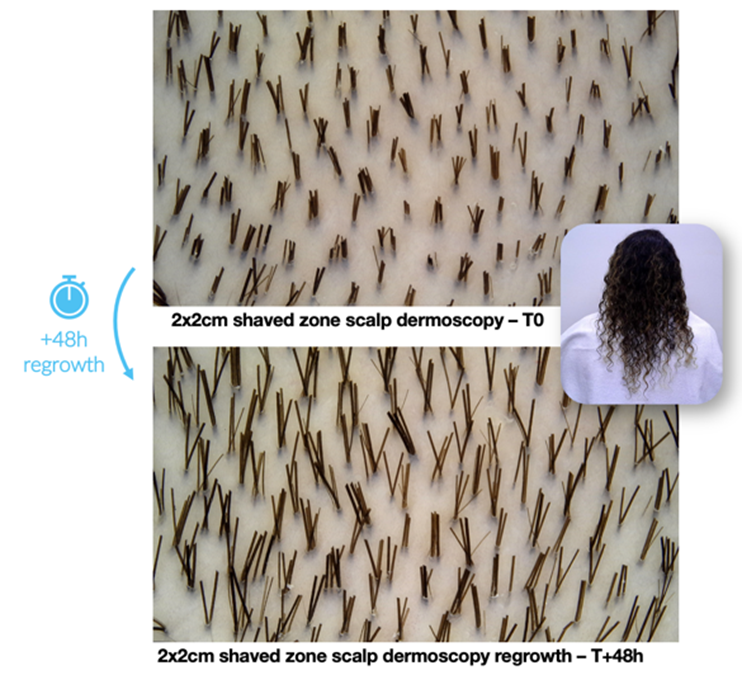
Figure 2: Scalp dermoscopy at T0 and T+48h
The comparison between these two points allows the precise identification of hairs that remained static and those that exhibited measurable growth. Through automated software processing combined with expert interpretation, the PTG enables the objective quantification of key follicular parameters, including hair density (hairs/cm²), anagen and telogen ratios, growth rate, hair shaft diameter, and follicular miniaturization patterns.
The 48-hour interval is particularly critical, as it allows the direct calculation of growth velocity while minimizing biological variability and external interference. This methodology provides a highly sensitive and reproducible assessment of follicular dynamics, making it the gold standard for studies involving anti-hair loss products, regrowth stimulants, and scalp treatments targeting follicular vitality.
Conclusion
Hair and scalp evaluation in cosmetic research has evolved into a highly specialized and multidisciplinary field, where follicular biology, scalp physiology, fiber biomechanics, barrier science, and cosmetic performance converge. By combining methodological rigor with multi-ethnic clinical approaches and real-life exposure models, research partners such as CIDP are driving innovation and ensuring that cosmetic claims are not only scientifically substantiated but also globally relevant and consumer focused.
Contact info@cidp-cro.com for more information.
CONTACT
Vandana Mungroo
Head of Business Development
info@cidp-cro.com
www.cidp-cro.com