Anne Charpentier
Founder & CEO, Skinobs
Abstract
Over twenty years, neurocosmetics has moved from a formulator’s intuition to a structured field of research. The skin is not a passive barrier but a densely innervated sensory interface, able to receive and to produce the same mediators as the brain. The neuro-immuno-cutaneous-endocrine system describes this permanent dialogue, and the mechanisms of action of actives such as botox-like peptides or menthol are established at the molecular level. The category nevertheless remains hard to size: the scatter in available estimates reflects unstable category boundaries rather than a statistical flaw. Is the lack of shared evaluation protocols the reason? And how, ultimately, should the promises of a de-stressing serum or a “well-being” mask be measured? Objectifying a neurosensory benefit calls for multidimensional protocols that combine the behavioural, physiological and cognitive components of emotion, suitable instrumentation and attention to cultural factors. The evaluation challenge is therefore not only scientific or regulatory: it is also economic.
The skin reveals our inner state and remains closely bound to the psyche. Often described as a second brain, it responds to stress, anxiety and external aggression through immediate manifestations: redness, sweating, pruritus. Emotions, at once physical and instinctive phenomena, generate unconscious bodily signals that can be measured instantly and objectively. Applying a cosmetic product is itself a stimulus capable of altering heart rate, facial expressions and the activity of the skin surface, through a cognitive, behavioural and physiological process. This reality underpins both the promise of neurocosmetics and the methodological rigour that must accompany it.
The skin-brain axis, a new innovation priority
Demand is reasonably well described. According to the Beauty and Personal Care 2025 survey by Innova Market Insights, 62% of consumers worldwide consider that their skincare routine contributes to their mental balance, and 30% report having spent more over the past twelve months on products intended to improve their mood. Work by Givaudan Active Beauty indicates that 87% of consumers place mental health on a par with physical health, and that 77% regularly experience physical symptoms linked to stress, with consequences for the skin. Generation Z amplifies the trend: 80% of its members use beauty products as a lever for mental health. Adoption nevertheless remains culturally differentiated: 87% of Chinese consumers favour beauty for mental well-being, against 78% in the United States and 69% in France.
How large is the neurocosmetics market?
There is no reliable figure in the strict sense. All available estimates come from syndicated research firms that share neither a common definition of scope nor a common method. The gap between them ranges from one to two for the current year, and up to a factor of four for projections. One industry observer sums it up as follows: projections place the global category at 1.6 billion US dollars in 2025, with forecasts ranging from 3.6 to 12.8 billion by 2033 or 2035 depending on the analyst.
The explanation lies in scope. Should a soothing care product formulated with a menthol derivative be counted, a fragrance claiming an effect on mood, an active sold to a formulator, or only the finished product? Depending on the report, skincare, haircare and make-up are included or excluded.
The most robust signal lies elsewhere, on the innovation side. Innova Market Insights records a 3% growth in skincare launches carrying a neuro claim between 2020 and 2024, a modest progression that contrasts with the disruption narrative. In the field, in-cosmetics Global 2026 saw neurocosmetics become the watchword of exhibitors, with Givaudan Active Beauty launching PrimalHyal NeuroYouth, an active targeting sensory perception as a determinant of skin health. Brands are following suit, from Neurae, launched by Sisley in 2024, to Neuroaura, the make-up collection of the Italian company Gotha Cosmetics.
The skin, a neuro-immuno-endocrine interface
The skin is innervated by a complex peripheral nervous system that reaches the epidermis, the dermis and the hypodermis, with the exception of the stratum corneum. It is served by a two-way nerve network: sensory fibres, known as afferent, transmit information to the central nervous system; autonomic fibres, known as efferent, regulate blood vessels, glands and skin appendages.
Mechanoreceptors, namely Meissner’s corpuscles, Merkel’s disks, Pacinian and Ruffini corpuscles and free nerve endings, transmit touch, pressure and vibration. Thermoreceptors provide sensitivity to heat and cold; nociceptors take over as soon as the stimulus threatens tissue integrity. The information is transduced into nerve impulses and then relayed to the central nervous system by myelinated fibres of different diameters and types.
Source: OpenStax, Biology 2e, chapter 36.2 “Somatosensation”, figure 36.5. CC BY 4.0 licence. Freely available at openstax.org.
Neuromediators, a shared language of skin and brain
Sensory nerve fibres influence wound healing and the regulation of inflammation by releasing neuromediators. More than a hundred neuropeptides have been identified in humans. Substance P is involved in pain transmission, the regulation of inflammation and vasodilation; CGRP, calcitonin gene-related peptide, contributes to the dilation of cutaneous vessels and to thermal regulation; VIP, vasoactive intestinal peptide, modulates the cutaneous immune response. These molecules are produced by nerves as well as by keratinocytes, fibroblasts, Langerhans cells and immune cells.
The neuro-immuno-cutaneous-endocrine system
Described as early as 1996 by Laurent Misery, the neuro-immuno-cutaneous-endocrine system accounts for these interactions. Within it, the skin is a natural platform for the exchange of signals between internal organs and the environment, both subject to neurohormonal regulation and a producer of mediators. The main neuroendocrine axes are represented locally: the hypothalamic-pituitary-adrenal axis, with corticoliberin, corticotropic hormone and cortisol; the thyroid axis; the prolactin axis; the growth hormone and IGF-1 axis. Their receptors are expressed in the epidermis, the dermis, the sebaceous gland and the hair follicle. Imbalance in this system is implicated in several inflammatory dermatoses. In psoriasis, stress promotes activation of the innate immune system and the secretion of pro-inflammatory cytokines. In atopic dermatitis, the release of neuromediators by sensory nerves sustains the vicious circle of itch, scratching, barrier impairment and allergen penetration.
Documented mechanisms of action
The first definition of neurocosmetics is due to Professor Laurent Misery, in 2000: products applied onto the skin, having activity on the cutaneous nervous system or, more generally, effects on skin mediators. Two broad mechanisms are described: modulation of neurotransmitter release, or agonist or antagonist action on their receptors. Botox-like peptides illustrate the first. Acetyl Hexapeptide-8, an analogue of the N-terminal portion of the SNAP-25 protein, interferes with the formation of the SNARE complex, reduces acetylcholine release at the neuromuscular junction and decreases muscle contraction, with a reported 20.6% reduction in the appearance of wrinkles within one week. Menthol illustrates the second: it activates the thermosensitive TRPM8 channel, which responds below 26°C, and produces a sensation of freshness without any actual change in skin temperature.
Other strategies target neuro-hormonal deregulation along two complementary lines:
- stimulating the synthesis, by skin cells, of molecules involved in the control of pain and well-being, namely beta-endorphins and the melanotropic hormone alpha-MSH,
- neutralising negative sensory stimuli by limiting the effects of mediators such as substance P or cortisol, or by reducing the hyperreactivity of TRPV1 and TRPA1 nociceptors.
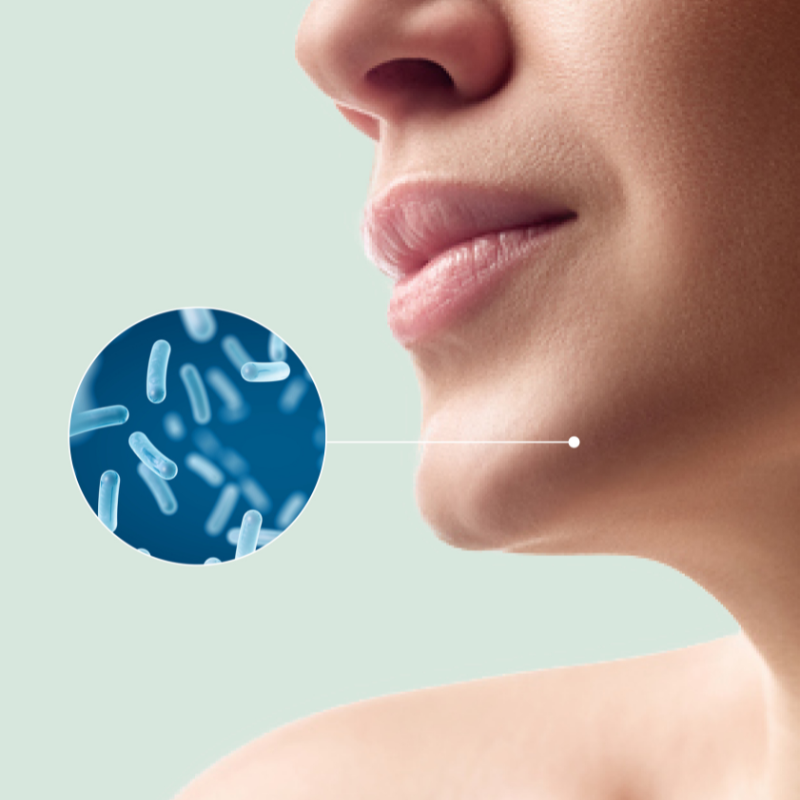
More recently, microbiomics has opened the way to cutaneous psychobiotics, the skin flora also taking part in the dialogue with the brain.
Evaluating the neurosensory benefit
Sensory analysis, conducted with naïve or expert panels, remains the historical foundation for the evaluation of perceptions. It nevertheless reaches its limits as soon as an emotion has to be objectified: structured scales require the participant to put into words an experience that is not always verbal, and the context of participation may steer responses towards positive appraisal. Self-reported data therefore cannot be the sole measure of safety and efficacy.
Experts agree that 6 primary emotions, sometimes more, constitute the common and universal base of individuals with: pleasure, sadness, fear, disgust, surprise, and anger, (contempt, shame, guilt, curiosity).
These emotions are immediate adaptive chemical and neuronal responses to the environment. Thanks to emotions, consumers can describe an experience of cosmetics application as positive (pleasant) or negative (unpleasant). Pleasure is a nice experience that arises from an anticipated or real satisfaction of a desire or need. Pleasure can be measured through quantifying emotions, using neuroscience and psychology. The emotional response as a subjective feeling associated with an event is spontaneous, instantaneous, rapid, universal and consists of the 3 expressive, physiological, and subjective components. The effect of the application of a cosmetic product is unconsciously and quickly evaluated by the brain.
When it comes to claims, the study of emotions makes it possible to evaluate a wide range of perceptions caused by the application of a product and the improvements in self-representation as well as the physiological effects induced. To objectify emotions scientifically, there is not a single simple and direct method but a multitude of methods. Evaluation managers can access, free of charge, more than 200 methods related to this question in the Skinobs database, and can approach more than 500 laboratories worldwide for in vitro and in vivo studies.
To increase the reliability of these analyses, which concern an unconscious and implicit process, it is necessary to consider, in the design of the protocols, the claim sought, the type of product studied and the typology of consumers, and to integrate the combination of the 3 components of the emotion:
1. Expressive or behavioural component: what modifies the physical expressions of the emotion, such as facial expressions, body language, postural expressions, and vocalizations.
- Facial expressions analysis quantifies emotions by examining the facial expressions of an individual. It involves looking at the facial features, such as the eyes, mouth, and brows, to determine the emotional state of the person.
- Postural expressions analysis is important to study the nonverbal communication involved in the generation of emotion. It makes it possible to look at the body language of an individual: the position of the body, the facial expressions, and the gestures.
- Vocalization analysis examines the acoustic properties of a person’s voice. This includes analysing the pitch, volume, and duration of vocalisations, as well as the intonation and rhythm of speech.
2. Physiological component: what changes body parameters. This represents the individual evolution of the autonomic nervous system and its global regulation of peripheral functions. It is non-specifically linked to the emotions, and representative of sympathetic and parasympathetic activities. The physiological component of emotion is studied using various instrumentations such as electroencephalography (EEG), functional magnetic resonance imaging (fMRI), and positron emission tomography (PET), as well as cardiac rhythm, sweat, skin pH and skin hydration, for example.
3. Subjective or cognitive component: what can be verbalised. It concerns the mental content of the subject: direct or indirect description of their emotions: pleasure, sadness, fear, disgust, surprise, anger, contempt, shame, guilt, curiosity. The cognitive component of emotion is the mental process of interpreting and understanding the emotional experience. It involves various cognitive processes such as attention, and covers the individual’s subjective experience of emotions, through their thoughts, feelings, and behaviours.
Protocol design remains decisive: the claim sought, the product category, the consumer profile and the cultural context. A study measuring the effect of a fragrance on well-being in two geographical areas demonstrated an impact on the surrounding social network in only one of them, a gap of exclusively cultural origin.
A requirement of proof
In February 2024, the Psychodermatology group of the French Society of Dermatology issued a warning about the cerebral effects of cosmetics, recalling that applying products onto the skin can have direct effects on the nervous system, and therefore a possible impact on mood or mental state, and questioning the regulatory boundary of the cosmetic category. At the same time, while peptides, adaptogens and cannabidiol show results in fundamental research, clinical data on finished formulas remain very limited. The term wellness has been overused: it must be associated with tangible results, which is what regulation requires. In the United States, the Modernization of Cosmetics Regulation Act of 2022 already requires safety data to be derived from scientifically robust methods.
Towards an objectified emotional cosmetics
Progress will come first from aggregation: combining the behavioural, psychological, physiological and biological levels, and repurposing devices proven in other industries. One identified need is a device allowing rapid sampling and measurement of beta-endorphins, whose levels rise under the effect of positive emotions; the analysis of volatile organic compounds (VOCs) emitted by the skin as markers of pleasure is a complementary avenue. Artificial intelligence and algorithms will become decisive contributors, both for the measurement of emotions and for the exploitation of large safety and efficacy datasets. The third generation of emotional and multisensorial cosmetics will combine touch and aroma functions with ever finer targeting, to bring objectified benefits and positive emotions to the user and to those around them.
References
- Misery L. [Neuro-immuno-cutaneous system (NICS)]. Pathol Biol (Paris), 1996;44(10):867-74.
- Misery L. Les nerfs à fleur de peau. Int J Cosmet Sci, 2002;24(2):111-6.
- Filaire E. The skin, a neuro-immuno-endocrine system. Interview by Rachida Nachat-Kappes. Expression Cosmétique, no. 72, November-December 2021.
- Dos Santos M. Neurosensory approach and neurocosmetics. PhD thesis, 2024.
- Abriat A. Neurocosmetics for health and beauty. COSSMA, 9/2023.
- Meintjes M. Novel neurocosmetics: understanding the skin-brain axis’ influence on cosmetics. Personal Care Insights, 25 March 2025.
- Rizzi V, Gubitosa J, Fini P, Cosma P. Neurocosmetics in skincare: the fascinating world of the skin-brain connection. Cosmetics, 2021;8:66.
- Charpentier A. Neurosensory evaluation, a new approach for cosmetics. HPC / Skinobs, 2023.
- The Business Research Company. Neurocosmetics market global report 2026.
- SkyQuest. Neurocosmetics market forecast report, December 2025.
- Market estimates published by Grand View Research, Fortune Business Insights and Market.us, 2024 to 2026.
- The Skin Behavior Lab. Neurocosmetics in Europe: who is actually building the science, April 2026.
- Personal Care Insights. In-cosmetics Global 2026 review: well-being demands fuel neurocosmetics emergence, April 2026.