
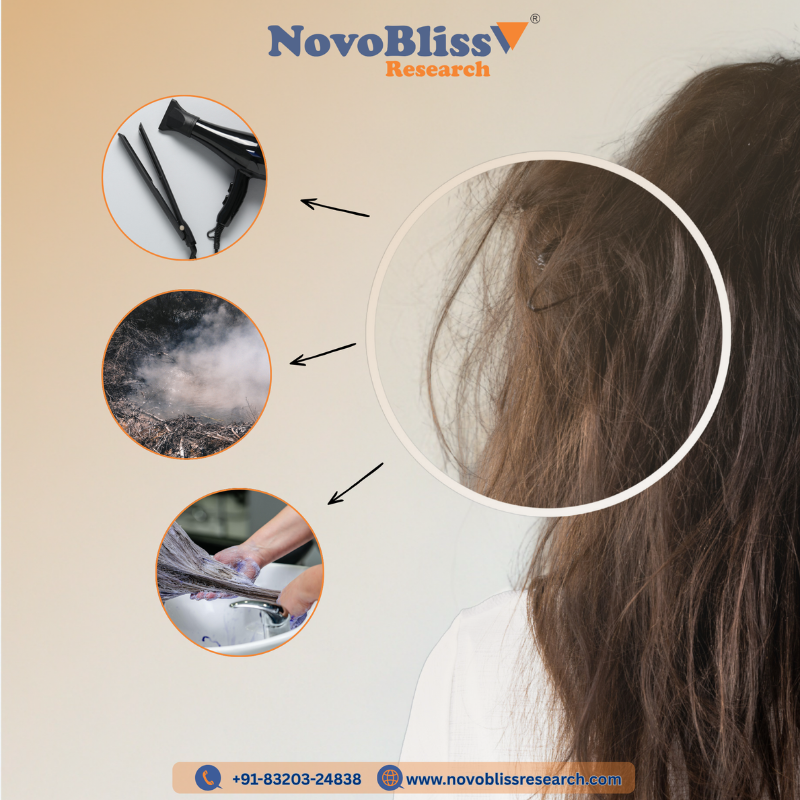
Hair fall due to breakage is a widely reported concern influenced by a combination of intrinsic and extrinsic factors. Among these, environmental and cosmetic stressors such as pollution, ultraviolet (UV) radiation, heat exposure, and chemical treatments play a significant role in damaging the hair shaft. These factors collectively contribute to increased breakage, reduced strength, and deterioration of overall hair condition.
A recent in-vitro study conducted by NovoBliss Research investigated the impact of such environmental and cosmetic exposures on hair and evaluated the effectiveness of a Neeli Bhringraj oil formulation in reducing hair breakage under controlled experimental conditions. The study provides structured evidence on how repeated exposure to external stressors affects hair and how targeted treatment can modify these outcomes.
Simulation of Environmental and Cosmetic Stressors
To replicate real-world conditions, standardized human hair swatches were subjected to multiple forms of controlled damage. These included repeated surfactant washes using sodium lauryl ether sulfate (SLES), thermal exposure through a straightening iron at 220°C, along with 30 minutes of exposure to UV radiation and automotive pollution.
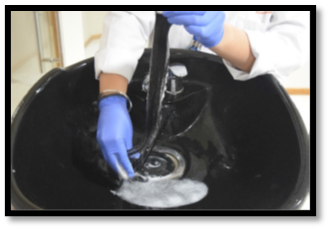
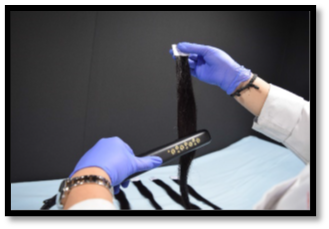
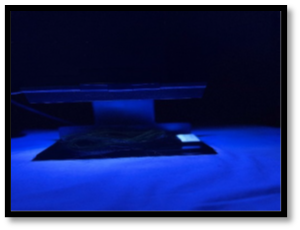
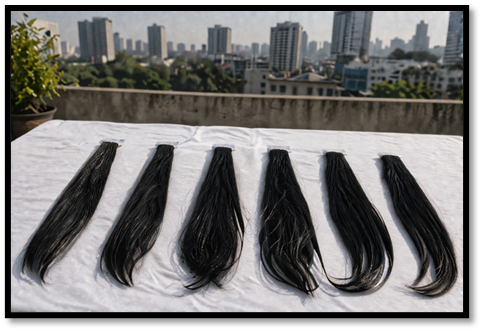
These stressors were selected to reflect commonly encountered environmental and cosmetic exposures. Repeated application of these conditions resulted in measurable damage to the hair swatches, thereby creating a suitable model for evaluating protective interventions.
Study Design and Treatment Protocol
The study was conducted as an in-vitro, randomized, double-blind, controlled investigation. Damaged hair swatches were divided into two groups: a test group treated with the Neeli Bhringraj oil formulation and a control group treated with coconut oil as a vehicle comparator.
Each group underwent 12 treatment cycles. In each cycle, the respective oil was applied to the hair swatches, left for two hours, followed by washing with a non-conditioning shampoo and drying under controlled conditions.
A fixed interval of ~24 hours between two applications was maintained to mimic regular exposure and allow measurable biological response. This repeated treatment approach was designed to assess the cumulative effect of the formulation under conditions of ongoing environmental stress.
Assessment of Hair Breakage
Following completion of the treatment cycles, all samples were subjected to fatigue testing using the TESTRONIX Tensile Strength Tester Automatic Combing System. This method involved controlled combing strokes applied under standardized load conditions to induce breakage.
Broken hair fibers were collected and analyzed. To ensure accuracy, only a cut-off of three-fourths (¾) of the full hair length.
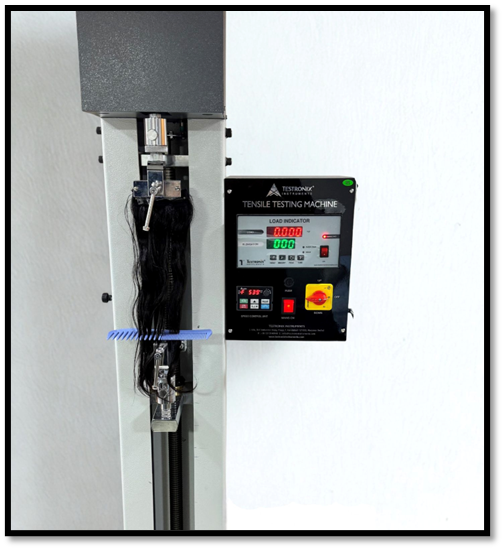
The broken fibers were further categorized based on their length into three groups:
- Short (<6.25 cm)
- Medium (6.25–12.5 cm)
- Long (>12.5 cm)
This classification enabled detailed evaluation of breakage patterns across both groups.
Results: Reduction in Hair Breakage
The study demonstrated a statistically significant reduction in hair breakage in the test group compared to the control group. The mean number of broken hair fibers was 11.67 ± 4.46 in the treated group, whereas the control group showed 21.67 ± 9.69 broken fibers (p < 0.01).
This corresponds to a 4.19-fold improvement and a 76.11% reduction in hair breakage in the treated group. These findings indicate that the treatment was effective in reducing hair fall associated with breakage under the tested conditions.
Distribution of Broken Hair Length
Further analysis revealed differences in the distribution of broken hair lengths between the two groups. In the test group, a relatively lower proportion of short-length fragments was observed. In contrast, the control group exhibited a higher proportion of short fragments compared to test group fragments across multiple samples.
Additionally, the test group showed a higher proportion of longer fragments, suggesting that while breakage occurred, it was less severe compared to the control group.
Interpretation of Findings
The findings suggest that repeated exposure to environmental and mechanical stressors leads to increased hair breakage. The combination of surfactants, heat, UV radiation, and pollution contributes cumulatively to damage under in-vitro conditions.
The application of the test formulation demonstrated a measurable reduction in breakage and altered the pattern of broken hair fragments. This indicates its role in minimizing damage associated with repeated environmental and cosmetic exposure.
Conclusion
This in-vitro study provides evidence that environmental stressors such as pollution, UV radiation, heat, and surfactant exposure contribute significantly to hair breakage. The use of a controlled fatigue testing model enabled objective assessment of these effects.
The results showed that treatment with the Neeli Bhringraj oil formulation significantly reduced hair breakage and the observed reduction in short-length breakage and shift toward longer fragments indicate enhanced tensile resilience and minimized structural damage.
Overall, the study conducted by NovoBliss Research highlights the impact of repeated environmental and cosmetic exposure on hair and demonstrates the effectiveness of a targeted intervention in reducing breakage under simulated conditions.
Link to the Publication – https://novobliss.in/research-and-scientific-publications/publications/
Contact
Dr. Maheshvari Patel – Technical Director
maheshvari@novobliss.in

To know more about NovoBliss Research expertise: https://www.skinobs.com/c/labo.php?id=281