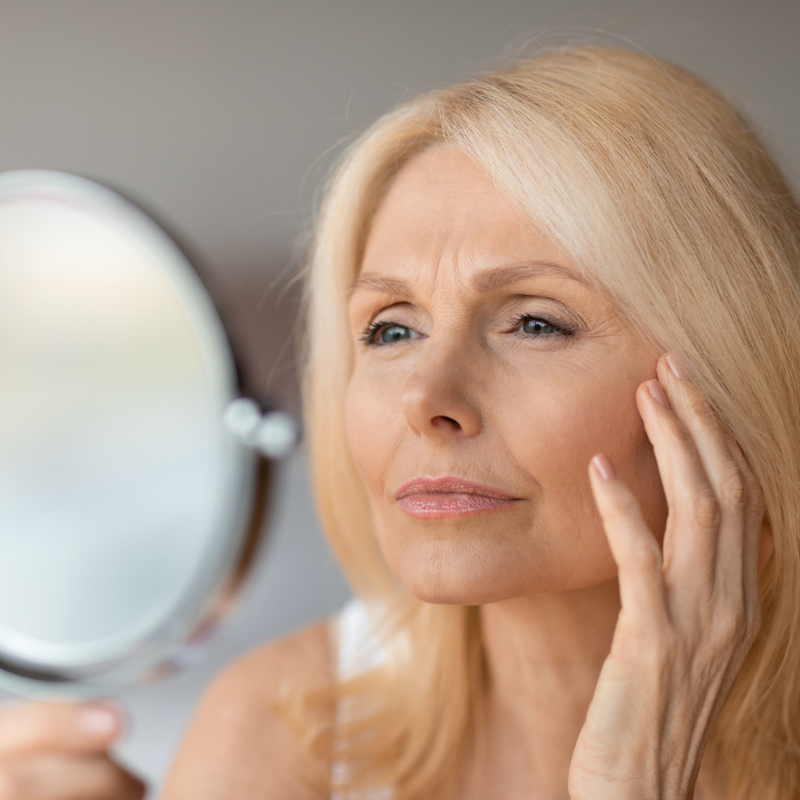
Skin elasticity is a fundamental biomarker of aging, representing the skin’s ability to recover its original shape after mechanical deformation. Collagen, elastin fibers, and the extracellular matrix play a central role in maintaining elasticity. With age, their degradation leads to sagging, wrinkles, and loss of firmness, making elasticity a critical target for anti-aging cosmetics.
For cosmetic scientists, accurately measuring elasticity is essential to substantiate claims, optimize formulations, and guide R&D. Regulatory authorities such as the FDA and the European Cosmetics Regulation (EC No 1223/2009) increasingly demand robust evidence for product efficacy, especially for anti-aging claims.
Why Is Skin Elasticity a Key Parameter?
Elasticity reflects multiple skin components:
- Collagen density and orientation: Determines tensile strength.
- Elastin fibers: Allow reversible stretching of the dermis.
- Extracellular matrix hydration: Contributes to viscoelasticity.
- Glycosaminoglycans (GAGs): Maintain water content and tissue resilience.
Biomechanical parameters include immediate distension (Ue), delayed distension (Uv), and final retraction (R). Accurate measurement requires precise instrumentation and controlled environmental conditions.
Which Techniques Are Most Effective for Measuring Skin Elasticity?
| Technique | Principle | Measured Parameters | Advantages | Limitations | Typical Application |
|---|---|---|---|---|---|
| Cutometer | Suction-based deformation and optical measurement | Ue, Uf, Uv, Ur | Gold-standard, reproducible, non-invasive | Sensitive to humidity and temperature | Clinical trials, product efficacy studies |
| Ballistometer | Rebound velocity measurement | Viscoelastic modulus, stiffness | Rapid, quantitative | Limited to superficial layers | Elastin-targeted cosmetic evaluations |
| DermaLab | Suction + optical sensors | Compliance, distension, creep | High precision, digital output | Expensive, trained operators needed | High-end R&D, regulatory submissions |
| Ultrasound Elastography | Ultrasound imaging of dermal stiffness | Shear wave velocity, modulus | Depth-resolved, non-invasive | Costly, expert interpretation | Advanced research, personalized skincare |
| Optical Coherence Elastography (OCE) | OCT + mechanical stimulation | Localized stiffness mapping | Micrometer resolution, non-invasive | Experimental, limited availability | Cutting-edge R&D in anti-aging |
Market Insights
The global anti-aging skincare market exceeded USD 60 billion in 2024 and is projected to reach USD 80 billion by 2030, driven by growing consumer demand for evidence-based products. Regions such as North America, Western Europe, and Asia-Pacific show strong growth, particularly for scientifically validated anti-aging solutions. Brands integrating validated elasticity testing gain a competitive advantage, strengthening consumer trust and ensuring compliance with regulatory authorities.
Best Practices for Accurate Testing
- Control environmental conditions: Temperature (20–22°C) and humidity (40–60%) are critical.
- Standardize subject preparation: Avoid topical products 12–24 hours before testing.
- Ensure measurement reproducibility: Multiple readings improve statistical reliability.
- Integrate complementary biomarkers: Combine elasticity with hydration, thickness, and collagen content.
- Use rigorous statistics: Longitudinal studies and appropriate parametric/non-parametric tests improve credibility.
Measuring skin elasticity accurately is essential for substantiating anti-aging claims. Using advanced techniques such as suction-based Cutometers, ultrasound elastography, and optical coherence elastography enables cosmetic brands to quantify efficacy scientifically, optimize formulations, and strengthen market positioning.
With Skinobs, find your methods, consultants, laboratories for your testing projects to substantiate your claims. Worldwide. In minutes.