The skin, oral, and hair microbiomes represent complex ecosystems whose understanding has become essential for developing innovative dermocosmetic solutions. However, navigating the landscape of available analytical techniques can be challenging. This newsletter aims to clarify the different approaches to microbiome analysis and explain how choosing the right method can make the difference between answering your research question accurately—or missing critical insights entirely.
Beyond Bacteria: The Full Spectrum of Skin and Oral Microbiota
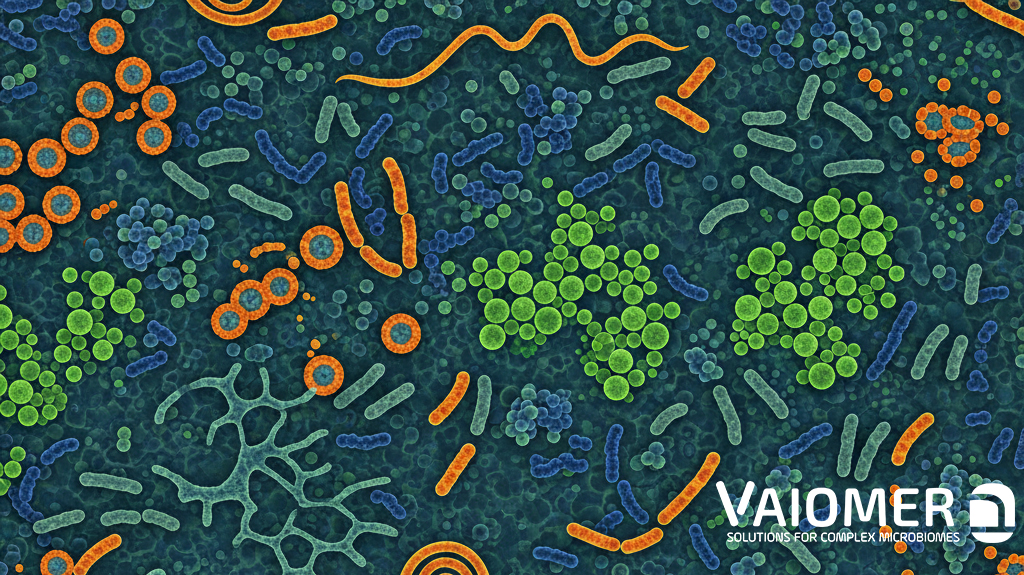
Microbiome research has historically focused on bacteria. Yet the reality is far more nuanced. The skin harbors a diverse community of microorganisms including fungi (the mycobiome), unicellular and multicellular eukaryotes (Demodex for instance), and of course, numerous bacteria. Each component plays distinct or collaborative roles in skin homeostasis, and understanding their interactions is crucial for developing effective dermocosmetic formulations to modulate or protect the microbiome.
Fungi, particularly Malassezia species in skin, and Candida species in the oral cavity, play fundamental roles in maintaining homeostasis, interact with the immune system, can compromise barrier integrity, and contribute to disease when imbalanced. Conditions such as atopic dermatitis, seborrheic dermatitis, and pityriasis versicolor are linked directly to shifts in mycobiome composition, while the oral mycobiome is associated with numerous conditions, such as dental caries, periodontitis, or oral lichen planus.
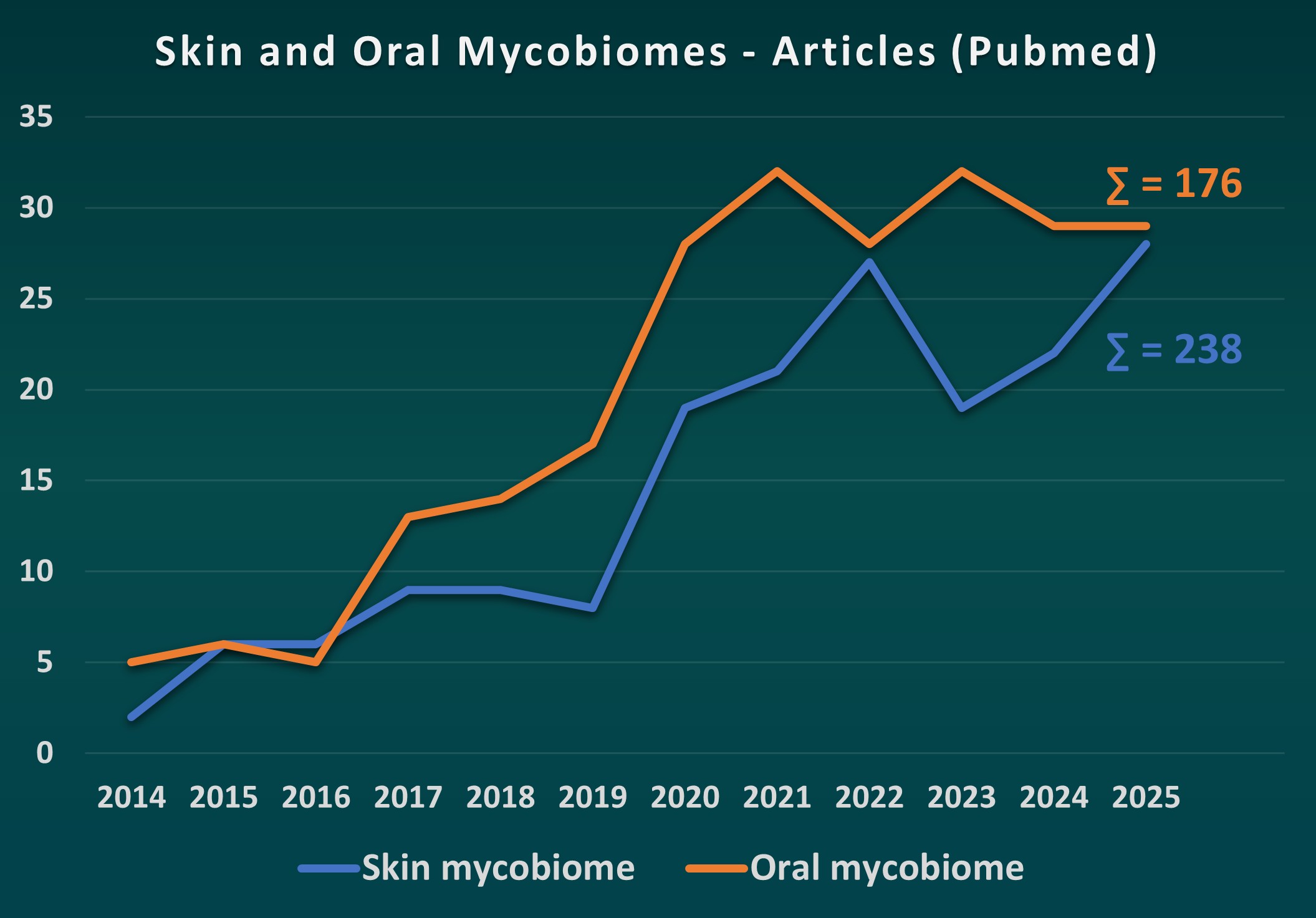
Mycobiome analysis has become increasingly important for dermatology, dermocosmetics and oral care, as illustrated by the recent explosion of publications in the domain.
The multifaceted nature of the microbiota demands analytical approaches tailored to specific research questions.
The Analytical Toolbox: Matching Method to Questions and Overcoming Technical Challenges
16S rDNA sequencing remains the cornerstone of bacterial microbiome analysis. It provides comprehensive bacterial community profiling with excellent reliability. Contrary to common misconceptions, 16S isn’t simply a budget alternative to shotgun metagenomics. It answers specific questions with often superior quantitative accuracy. Moreover, 16S datasets are significantly easier to reprocess and reanalyze as bioinformatic pipelines evolve. However, skin, oral, and hair samples present unique analytical challenges. Given the low microbial biomass of these samples, each step from sampling to DNA extraction and amplification must be carefully optimized to ensure data reliability.
ITS sequencing opens the window to the fungal world, revealing the mycobiome composition. This technique is essential when investigating conditions where fungi play a central role, though it comes with its own technical challenges, particularly robust fungal cell walls, necessitating optimized extraction protocols.
Shotgun metagenomics provides the deepest analyses of microbiome composition and function, revealing not only “who’s there” but also “what they can do” through functional gene analysis. However, this power comes with constraints: shotgun sequencing requires substantial DNA quantities and is particularly sensitive to human DNA proportions. The high percentage of human DNA in dermatological and oral samples often requiring specialized depletion protocols, higher sequencing output, or accepting reduced microbial coverage.
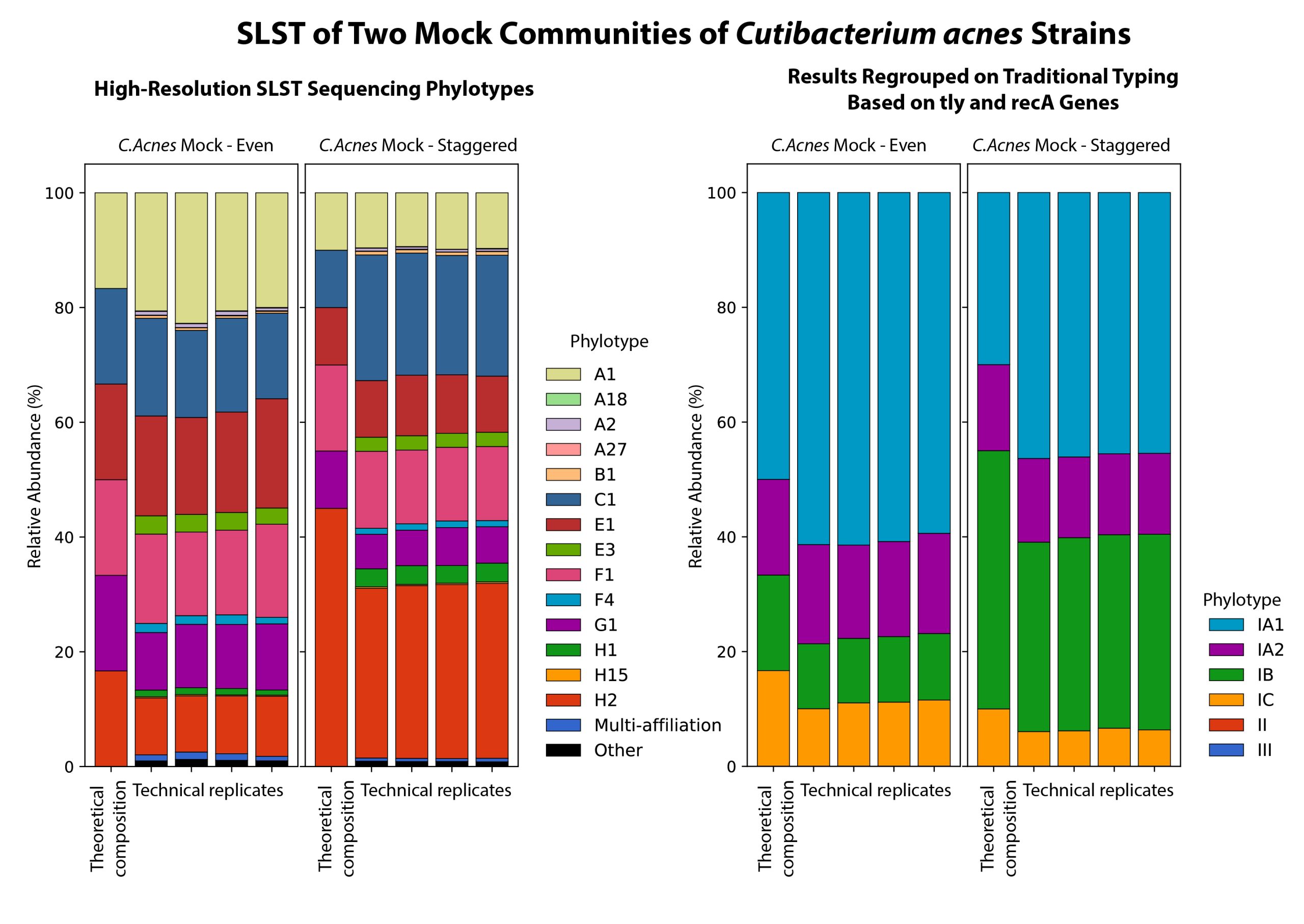
Targeted approaches address specific research questions with precision. For example, the tuf gene sequencing enables precise Staphylococcus species identification, while Single-Locus Sequence Typing (SLST) provides strain-level resolution for species such as Cutibacterium acnes.
Quantification strategies, including qPCR, digital PCR (dPCR), and PCR array, offer high-precision measurement of specific taxa or functional genes. These methods are invaluable for validating findings, monitoring specific targets, or conducting cost-effective multi-target analysis.
Expertise in low-biomass samples is essential: you need a reliable partner who delivers tailored solutions to answer the right questions and overcome the inherent technical challenges. This is precisely what Vaiomer provides.
Vaiomer: Expert in Microbiome Analysis for Skin, Hair, and Oral Samples
Vaiomer is a French company specializing in microbiota analyses across diverse biological samples. As a globally recognized leader in microbiota analysis for low-biomass and complex samples beyond the gut, we offer specialized expertise in skin, oral, and hair microbiomes specifically designed for the dermocosmetic and oral care industry.
Our 15+ years of experience in microbiome analysis is validated through 50+ peer-reviewed scientific publications, demonstrating our strong expertise and methodological rigor. Our innovative methodologies enhance understanding of health and homeostasis, support the development of personalized and microbiome-friendly skincare or oral formulations, and deliver critical insights into the efficacy and safety of products, active ingredients, probiotic skincare, and oral care solutions.
Beyond technical excellence, Vaiomer is committed to delivering rigorous quality results and comprehensive client support. Certified for Research Tax Credit (Agrément CIR), we offer both integrated analysis packages and fully customized analytical services tailored to specific research needs.
Our optimized methodologies enable microbiota analysis from diverse skin and oral samples—including swabs, adhesive tapes, patches, biopsies, explants, saliva, and hair follicles—and encompass the full range of analytical approaches, including but not limited to those mentioned above.
Don’t let technical limitations slow your innovation. Reach out to our team to discover how Vaiomer’s proven expertise can drive your next breakthrough in dermocosmetic or oral care research.
CONTACT
Benjamin lelouvier – Chief Scientific Officer
microbiome@vaiomer.com
www.vaiomer.com