Anne Charpentier Founder & CEO Skinobs
Abstract
Menopause constitutes a pivotal, non-linear phase of cutaneous ageing, governed by endocrine and epigenetic mechanisms in which both hormone levels and signal rhythmicity are determinant. Against an accelerating demographic backdrop, in which the proportion of women aged 65 and over now exceeds 20 percent across the European Union, Japan, South Korea and the United States, menopausal skincare has become a strategic, rapidly growing market segment, valued at USD 1.34 billion in 2025. Survey data confirm that most peri- and post-menopausal women experience multiple, emotionally consequential cutaneous changes while remaining insufficiently informed. This review positions the skin as a hormone-responsive and actively steroidogenic organ, capable of local intracrine synthesis of androgens, estrogens and corticosteroids independently of systemic hormonal status.
The transition is associated with documented histological alterations, including a roughly 30 percent decline in dermal collagen within five years of the final menstrual period and estrogen-dependent microbiome dysbiosis, underlying dryness, loss of firmness, pigmentary irregularities, hormonal acne and alopecia. In response, the industry is shifting from generic anti-ageing toward a holistic “pro-age” positioning, substantiated through adapted multi-ethnic protocols combining biometrology, expert scoring, biomarkers and omics technologies, supporting a precision-driven, life-stage-adapted model of scientifically substantiated positive ageing.
The skin is a hormone sensitive organ whose ageing follows a non-linear course, governed by endocrine and epigenetic mechanisms in which both the levels and the rhythmicity of hormonal signals are determinant. The menopausal transition, perimenopause included, calls for refined in vivo characterization, attention to specific targets such as pigmentation, and an evaluation strategy combining biometrology, expert scoring, self-assessment and emotional endpoints across multi-ethnic panels. The convergence of these requirements with omics technologies underpins the shift from generic cosmetics towards a precision driven, life stage adapted approach oriented towards scientifically substantiated positive ageing.
An Accelerating Societal Context
Why menopausal skin has become a strategic priority for the cosmetic industry. Demographic ageing, pronounced within the female population, is accompanied by an extension of healthy life expectancy and is reshaping expectations regarding cosmetic care. This shift is now a defining feature of the global population landscape. In the European Union, 22.0 percent of the population was aged 65 or over as of January 2025, up from 21.6 percent the previous year, with Italy (24.7 percent) and Portugal (24.3 percent) among the most affected countries. The trend is even more pronounced in Asia: Japan, the world’s most aged nation, reported that 29.3 percent of its population was 65 or older in 2024, while South Korea officially crossed the 20 percent threshold in 2025, entering the ranks of “super-aged” societies. In the United States, the share reached 18.0 percent of the population, or 61.2 million people, in 2024, continuing a steady rise from 12.4 percent two decades earlier. For all female populations, the associated hormonal transitions affect the skin, the integumentary appendages and emotional balance concurrently. Perimenopause and menopause constitute pivotal periods, characterised by increased dryness and reactivity, loss of firmness and density, redness, hot flushes, hormonal acne and hair loss, together with a notable psychological impact such as sleep disturbances, mood lability and declining self-confidence. This dual dimension, both biological and emotional, underlies the demand for targeted solutions and the corresponding adaptation of evaluation protocols.
Market Trends and Women’s expectations
The global menopause skincare market was valued at approximately USD 1.34 billion in 2025 (Grand View Research) and is projected to reach USD 1.47 billion in 2026. Over the longer term, it could attain USD 2.92 billion by 2033, at a mean annual growth rate of 10.3 percent. For 2025 and 2026, the segment ranges broadly between USD 1.3 and 3.4 billion depending on its definition, growing at roughly 9 to 10 percent per year. Europe accounted for 28.0 percent of market revenue in 2025, driven by its ageing female population and the rising demand for age adapted solutions.
Women lived experience confirms the scale of this need. An international survey of more than 4,300 peri and post-menopausal women across nine countries, presented by Galderma at IMCAS 2026 in Paris, reveals that menopause triggers multiple cutaneous changes while awareness of the subject remains limited. On average, women report three distinct changes, most frequently lines and wrinkles, loss of firmness and elasticity, dryness and a duller complexion, rated six out of ten in severity. These alterations weigh on emotional well-being: 60 percent of respondents feel less attractive, 57 percent anxious, 55 percent less confident and 46 percent less sociable (1). The survey also exposes a substantial knowledge gap: more than half of women discover these changes only upon experiencing them, typically in their forties, while 30 percent would have wished to be informed as early as their thirties. This lack of anticipation favors corrective aesthetic treatments over genuinely preventive approaches.
The specificity of the Menopausal Skin
The endocrine and structural mechanisms that justify a life stage adapted, precision approach.
The Skin as a Hormone Sensitive Organ
Recent approaches shared at the Cosmetotest Symposium in March 2026 converge towards a redefinition of the skin as a hormone responsive organ, reflecting systemic physiological transitions. The endocrine epigenome provides a unifying interpretative framework: hormones durably modulate gene expression, thereby explaining how an identical genome can give rise to distinct phenotypes, ageing kinetics and adaptive capacities.
Circadian hormones such as melatonin, cortisol as a key mediator of metabolism and stress via the hypothalamic pituitary adrenal axis, and female sex hormones jointly orchestrate tissue repair, inflammatory balance, extracellular matrix homeostasis and barrier integrity. Of particular note, cutaneous biology appears to depend not only on hormone levels but also on the rhythmicity and coherence of endocrine signals. Regular profiles support balanced adaptation, whereas dysregulated states increase vulnerability and alter ageing trajectories, most markedly during phases of hormonal variability such as the menstrual cycle and the peri to post-menopausal transition. This framework justifies a shift from symptom oriented anti-ageing towards a biologically informed well ageing model, structured around molecular networks such as barrier function, dermal remodeling,inflammatory cascades, pigmentation pathways, sebaceous activity and microbiome dynamics, rather than around a single target or ingredient.
Staging the Menopausal Transition: From Premenopause to Postmenopause
The menopausal transition is scientifically described according to the STRAW+10 system, the reference framework in reproductive endocrinology, based on menstrual cycle characteristics and hormonal markers (FSH, AMH, inhibin B).
Premenopause corresponds to the full reproductive period: regular cycles, followed by a slight, discreet decline in AMH and antral follicle count towards the end of this period, without perceptible change.
Perimenopause begins with marked cycle variability, elevated but fluctuating FSH, and subsequently progresses to skipped cycles or amenorrhea, with unpredictable residual ovarian activity. FSH, or follicle–stimulating hormone, is secreted by the anterior pituitary gland and constitutes the key marker of ovarian ageing and the menopausal transition. This late stage, lasting 1 to 3 years, accounts for the majority of hot flushes and night sweats. It ends 12 months after the final menstrual period (2).
Postmenopause begins retrospectively from this point. Its early phase (5 to 8 years) is characterised by rapid changes in FSH and estradiol before stabilisation; vasomotor symptoms frequently persist during this period. The late phase marks a definitive hormonal stabilisation, in which overall somatic ageing becomes the dominant factor.
Menopausal Skin: an Active Steroidogenic Organ

Skin is not merely a passive target of circulating steroid hormones, it is itself a peripheral steroidogenic organ, capable of locally synthesizing its own steroids, a phenomenon known as cutaneous “intracrinology” (3).The cell types involved are keratinocytes, dermal fibroblasts, hair follicle cells and, most notably, sebocytes, the most steroidogenically active, a point worth considering when selecting models and skin sites for efficacy testing. The mechanism relies on cutaneous uptake of adrenal DHEA/DHEA-S, locally converted by cutaneous enzymes (3β-HSD, 17β-HSD, 5α-reductase, aromatase). This produces active androgens (testosterone, DHT, linked to sebum production, hormonal acne and androgenetic alopecia), estrogens (estradiol, estrone) and corticosteroids (4). This mechanism helps explain the diversity of manifestations observed in peri- and postmenopause: as ovarian estrogen production declines, adrenal DHEA, still taken up by the skin, allows residual local synthesis of estradiol or DHT, depending on the enzymatic balance specific to each skin site and each woman. This locally produced androgen/estrogen ratio contributes to the relative hyperandrogenism characteristic of perimenopause, while also modulating dryness, loss of firmness and sensitivity. For dermocosmetics, this dimension supports an evaluation approach that also targets the enzymatic pathways and biomarkers of this local metabolism, guiding the development of actives that modulate cutaneous 5α-reductase or aromatase, closer to the skin’s actual physiology than to systemic hormonal status alone.
Cutaneous Signs of Menopause
The sustained decline in estrogen results in intrinsic cutaneous ageing comparable to age related ageing, yet accelerated and accentuated. Its manifestations are progressive and highly variable between individuals. Dryness is among the earliest signs of estrogen deficiency; in perimenopause, it is compounded by relative hyperandrogenism such as acne, hirsutism and hair loss, arising from the loss of balance between androgens, estrogens and progesterone.
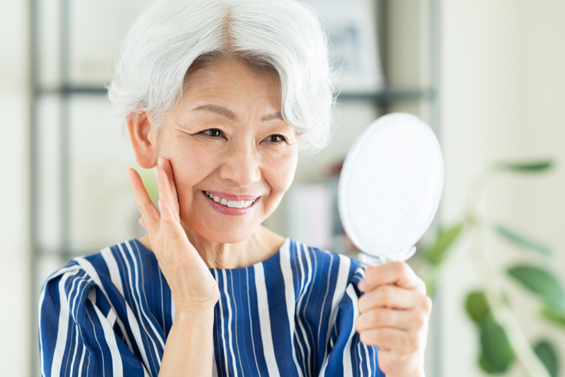
These signs may be categorized along several axes:
- Color and pigmentation: redness, senescent age spots, loss of radiance and complexion homogeneity.
- Skin topography: crow’s feet, furrows, forehead lines, fine lines of the upper lip and periorbital area, roughness.
- Hydration: drier epidermis and dermis, reduction in natural moisturizing factors.
- Skin structure: loss of density and thickness, alteration of the dermo epidermal junction and barrier function.
- Volume: slackening of the face and neck, loss of facial contour, eye bags, eyelids.
- Biomechanical properties: loss of firmness, tone and elasticity.
These signs are frequently accompanied by alopecia and nail alterations, as well as hot flushes and vascular disorders.
Histological Changes
The structural changes observed at menopause are now well documented. At the epidermal level, a decrease in the number of cell layers, a slowing of cell renewal and a loss of adhesion at the epidermal junction are observed. At the dermal level: a decline in cellular activity and number; a reduction in collagen content of approximately 30 percent within the five years following menopause; a modification of the collagen III/I ratio; an increase in metalloproteinases (MMP 1 and MMP 3, degrading enzymes); a rarefaction and horizontalization of collagen fibers; a decrease and disorganization of elastic fibers; a reduction in hyaluronic acid, essential to dermal hydration; and a thinning and dilation of vascular walls.
The Role of the Cutaneous Microbiome
The decline in estrogen also disrupts the cutaneous ecosystem. A reduction in microbial diversity and an imbalance, or dysbiosis, are observed, associated with decreased sebum, elevated pH and a weakened barrier. The depletion of lipids reduces sebum dependent Cutibacterium, thereby altering the equilibrium of bacterial communities. This dysbiosis is associated with diminished resilience, heightened inflammation (inflammaging) and dryness. The precise host microbiome interactions nonetheless remain poorly characterised: metagenomic approaches now aim to map these dynamics in order to develop targeted microbiome modulation strategies.
From Anti-ageing to Pro-age: a Holistic Response
How brands are repositioning around menopause, and destigmatizing the transition.
Once dismissed by anti-ageing marketing that rendered them invisible, menopausal women are now courted by brands working to destigmatize this transition through dedicated skincare and campaigns featuring women in their fifties. Incorporating well-being, the term “pro-age” proves more fitting than “anti-ageing,” considering the skin holistically: such care stimulates microcirculation, supports collagen, hydrates and redefines contours while delivering emotional and sensory benefits, hence evaluation integrating perception and quality of life. Menopause and the exposome constitute cumulative ageing processes; intrinsic hormonal ageing combines with reversible extrinsic factors (sun, tobacco, pollution, diet, stress), the disturbances accentuating intrinsic and photo-induced signs alike.
Certain brands claim scientific precedence: Vichy launched its first menopause skincare line in 1992, supported by 30 clinical studies involving more than 1,500 women and 9 scientific publications to date. Its range is structured by hormonal stage, with Peri Menopause and Post Menopause Day and night creams designed to restore hydration, plump the skin and improve firmness.
Evaluating the Performance of Skincare targeting Menopausal Skin
Adapted protocols and testing categories for scientifically substantiated claims.
To demonstrate the efficacy of such skincare clinically, protocols have been adapted: panels now include pre-menopausal and menopausal women presenting with targeted signs such as dryness, slackening and heightened sensitivity, and rely on international, multi-ethnic studies that capture the diversity of skin types.
Five principal categories of testing are deployed:
- Consumer tests and self-assessments;
- Sensory or emotional analyses;
- Biometrological studies covering hydration, resistance and biomechanical properties;
- Clinical scoring;
- Biology and biomarkers.
Evaluation benefits from combining subjective perception with objective measurement: questionnaires identifying the most frequently experienced changes, cross referenced with instrumental data and expert assessments, afford a holistic, evidence-based reading of the genuine impact of hormonal fluctuations. In the Skinobs database, evaluation managers can for free find more than 200 methods related to this question and contact more than 500 testing laboratories worldwide for in vitro and in vivo studies of dermocosmetics or ingredients performances.
At the molecular level, the expression of hydration related genes such as filaggrin and aquaporin 3, or of markers associated with androgenetic alopecia, is monitored. At the biomechanical level, suppleness, rigidity and tissue resistance are quantified to measure the tightening or firming effect. Non-invasive imaging, such as LC-OTC, Confocal Microscopy, from the centimeter to the nanometer scale, visualizes the epidermis, dermal density, thickness, collagen fiber organisation, water, lipids and the dermo epidermal junction. The design of each protocol in conjunction with contract research organisations, including inclusion criteria, measurement kinetics, treatment conditions and instrumental method, remains decisive.
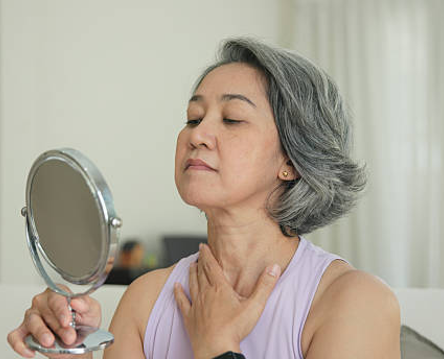
Characterizing the menopausal timeline in vivo represents a further priority. Although post-menopausal alterations are well documented, perimenopause remains poorly characterised in vivo. The biometric study conducted by Clarins addresses this gap by examining 121 Caucasian women aged 30 to 65 years, stratified into four groups, namely pre menopause, perimenopause, early menopause (≤5 years) and late menopause (>5 years), with a targeted comparison of perimenopause versus early menopause. The non-invasive parameters assessed, comprising sebum, transepidermal water loss, stratum corneum hydration, mechanical properties and standardized facial imaging, cover the functions most sensitive to estrogen deficiency and illustrate the need to characterize the transition as a non-linear continuum rather than as a simple pre to post menopause dichotomy. Beyond biomechanical and barrier parameters, hormonal fluctuations act upon the synthesis and distribution of melanin, thereby modifying complexion. These pigmentary disorders constitute a dermocosmetics target in their own right, calling for dedicated efficacy evaluation strategies.
Towards Precision Cosmetics
These approaches converge towards precision personalization, supported by next generation of omics technologies that map hormone skin interactions at the systems level. They enable the identification of predictive biomarkers, molecular signatures and functional pathways underpinning personalized formulation, microbiome modulation and clinically substantiated claims. Whether addressing ageing, radiance, biomechanical properties or hydration, evaluation methods increasingly favor higher resolution, wider measurement areas, and non-invasive, contactless techniques, with algorithms and statistics emerging as decisive future contributors. By combining classical biometric measurements with advanced devices and specific biomarkers, this hormonally intelligent cosmetic science deepens understanding of skin structure and function, fostering life stage adapted, evidence based positive ageing.
References
- Le Pillouer-Prost A., Kerob D., Nielsen M., Taieb C., Maitrot Mantelet L. « Skin and menopause: women’s point of view ». Journal of the European Academy of Dermatology and Venereology (JEADV), 2020, vol. 34, n°2. DOI: 10.1111/jdv.16242
- Sherman S. Defining the menopausal transition. Am J Med. 2005;118(12 Suppl 2):3-7.
- Labrie F, Luu-The V, Labrie C, Pelletier G, El-Alfy M. Intracrinology and the skin. Horm Res. 2000;54:218-29.
- Slominski A, Zbytek B, Nikolakis G, Manna PR, Skobowiat C, Zmijewski M, et al. Steroidogenesis in the skin: implications for local immune functions. J Steroid Biochem Mol Biol. 2013;137:107-23.