Over the past decade, microbiome science has become a cornerstone of cosmetic innovation. Indeed, skin health is closely linked to the exposome, and the exposome is not limited to a list of chemical pollutants: it also includes the dermocosmetic products we use daily. The impact affects not only the layers of eukaryotic cells that make up the body’s largest organ but also the microbiota that colonizes it. The skin microbiome synergy promotes cell renewal, immunity, pH balance, and barrier function, thereby helping to prevent skin infections.
Analyses of the impact of dermocosmetic products on microbiota composition are now routinely performed and have shown that the diversity of strains within the microbiota induces variations in sensitivity. These analyses can be conducted using in vitro tests, which allow a controlled assessment of the effects of different products or ingredients on microbial growth and diversity. In vitro models provide reliable and reproducible scientific data, making them a valuable tool for predicting the effects of formulations and ingredients.
The importance of biofilms:
On the surface of the skin, microorganisms do not live in isolation. They are naturally organized into structured communities called biofilms. These biofilms play a crucial role in skin homeostasis and repair mechanisms (Scalise et al., 2015).
This mode of organization provides microorganisms with several advantages: increased resistance to hostile environments, enhanced tolerance to antimicrobial agents, and the ability to rapidly adapt to changes in their surroundings. Through an intercellular communication system known as quorum sensing, they can also coordinate their activity, adjust their metabolism, and produce specific molecules, allowing them to persist long-term on the skin surface (Brandwein et al., 2016; Cha et al., 2025).
Thus, when assessing the impact of a product on the microbiome, the biofilm dimension is a critical factor.
Examples of results obtained in our laboratory:
The figure illustrates, for two finished products, their impact score on the microbiome, calculated by comparison with a control without product.
The strains were cultured as biofilms until the beginning of the maturation phase. The products were then applied to the biofilms and incubated for 4 hours. The impact was assessed by counting the microorganisms present in the biofilm after treatment.
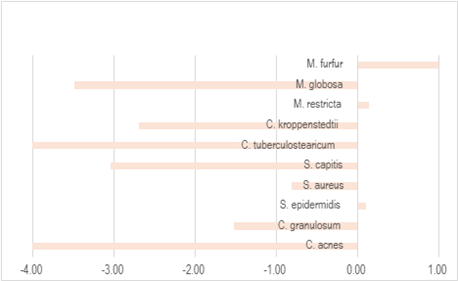
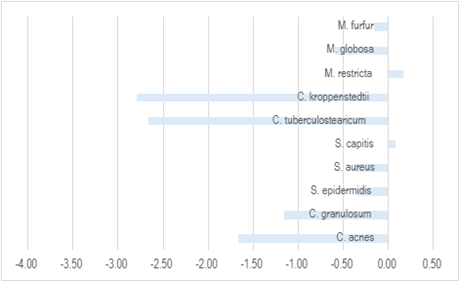
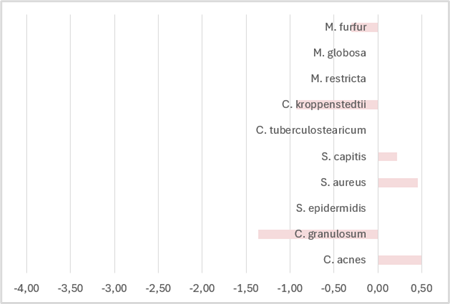
Figure 1. Impact of 2 moisturizers measured in Log10 variation
The results reveal a high heterogeneity in the activity of formulations on microorganisms. We have identified antimicrobial effects that alter microbiome diversity, as well as a loss of biofilm-forming capacity, which could compromise microbiome preservation while others exhibit an overall neutral effect, with no significant impact on these parameters.
Just as toxicity testing on eukaryotic cell lines is required, safety testing on the commensal microbiota, considered to be a second skin, will eventually be necessary to ensure product safety.
Tailored services and standardized Microbiome-Friendly offering :
At BYOME LABS, we provide personalized services tailored to each product and the specific needs of our clients. We take into account the formulation, mode of application, and marketing objectives to deliver all the scientific and strategic insights necessary to assess the impact of formulations on the skin microbiome.
In parallel, we have developed the standard “Microbiome Respect” offering for brands wishing to demonstrate that their products preserve the skin microbiome. In an emerging sector still lacking official regulations, it is easy to get lost among the many available offerings.
To address the need for standardization in this field, we contribute together with Cosmetic Valley and other industry stakeholders to the creation of a best-practice reference framework for microbiome-friendly cosmetics. This scientific white paper is based on a rigorous, collaborative approach involving brands, ingredient manufacturers, analytical laboratories, and universities. It enables knowledge sharing, establishes a comprehensive state of the art, and proposes reliable standards, marking a significant step toward cosmetics that fully integrate microbiome considerations and respect skin biodiversity.
CONTACT
Writers:
Stéphanie Badel-Berchoux
Laboratory director
stephanie.badel@byomelabs.com
Margaux Jeanmougin
Marketing director
margaux.jeanmougin@byomelabs.com
Emma Trapeaux
Marketing project manager
emma.trapeaux@byomelabs.com