From hair to scalp, the C-Cube Clinical Research combines standardized imaging and automated analyses to objectify many parameters: density, diameter, growth, anagen/telogen ratio, color, erythema or desquamation.
The demonstration of the effectiveness of hair products is now based on increasingly demanding criteria. Whether it is anti-hair loss, densifying, strengthening, anti-dandruff or even for sensitive scalps, brands are now waiting for objective, reproducible and quantifiable evidence.
However, hair analysis is often complex to implement. Many measurements are still based on manual evaluations requiring a significant amount of analysis time and strong operator expertise. Counting hair, measuring its diameter or evaluating its growth can represent several dozen minutes per subject and per visit.
In studies with several dozen or even hundreds of participants, this workload quickly becomes a limiting factor.
Faced with these challenges, the automation of analyses appears to be a natural evolution to improve productivity, standardization and the robustness of results.
Standardized imaging for hair analysis
The C-Cube Clinical Research has been developed to address this issue by combining high-resolution image acquisition and automated analysis tools.
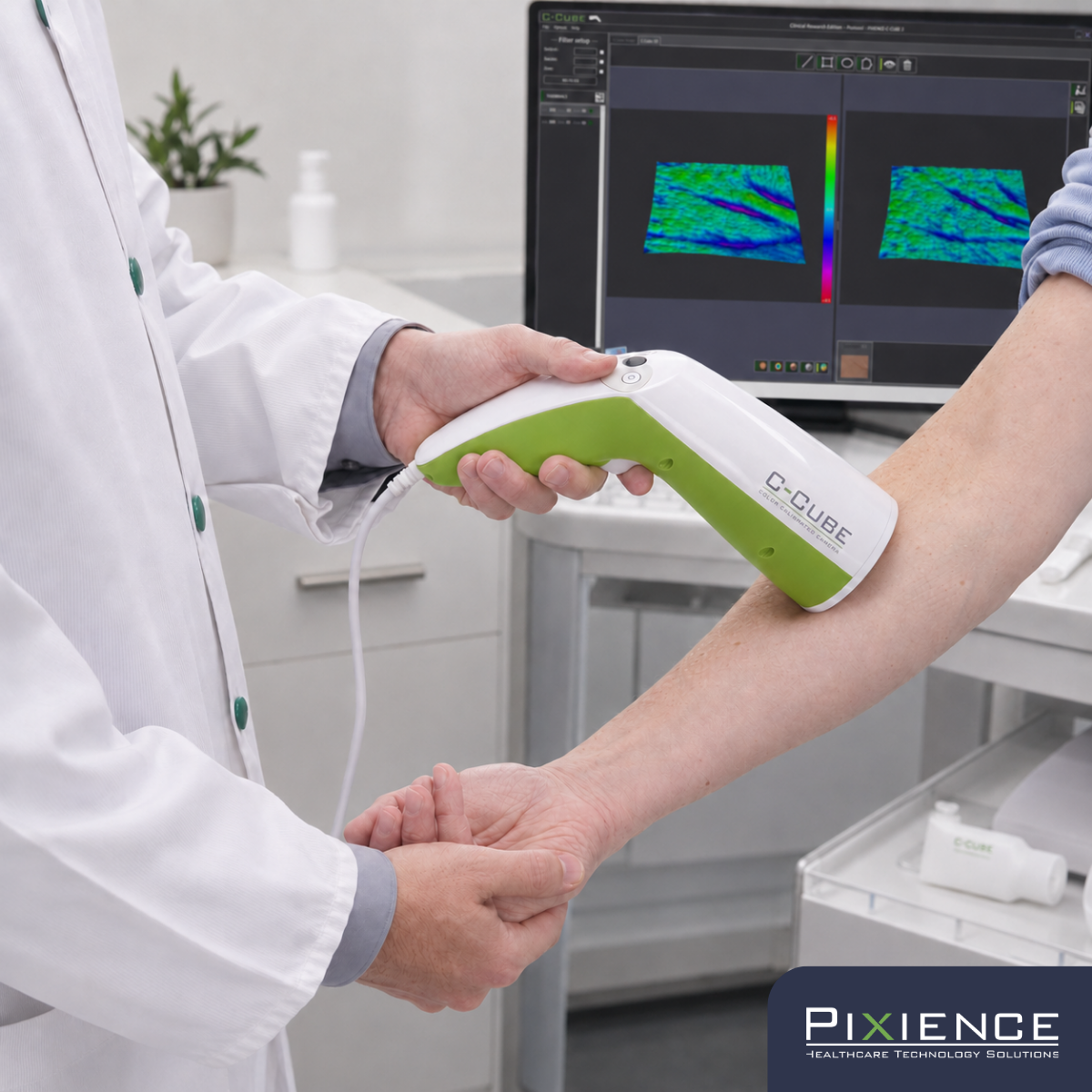
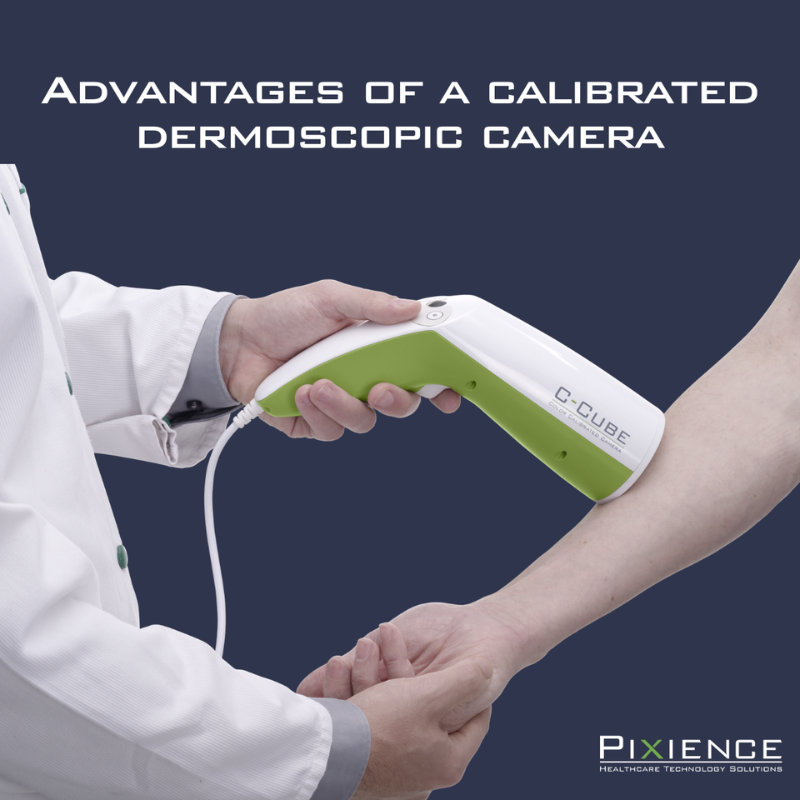
Thanks to its calibrated imaging technology, the C-Cube makes it possible to capture reproducible images of the scalp while ensuring the standardization of capture. The data obtained can then be analyzed directly in the Clinical Research software to generate objective and statistically actionable measurements.
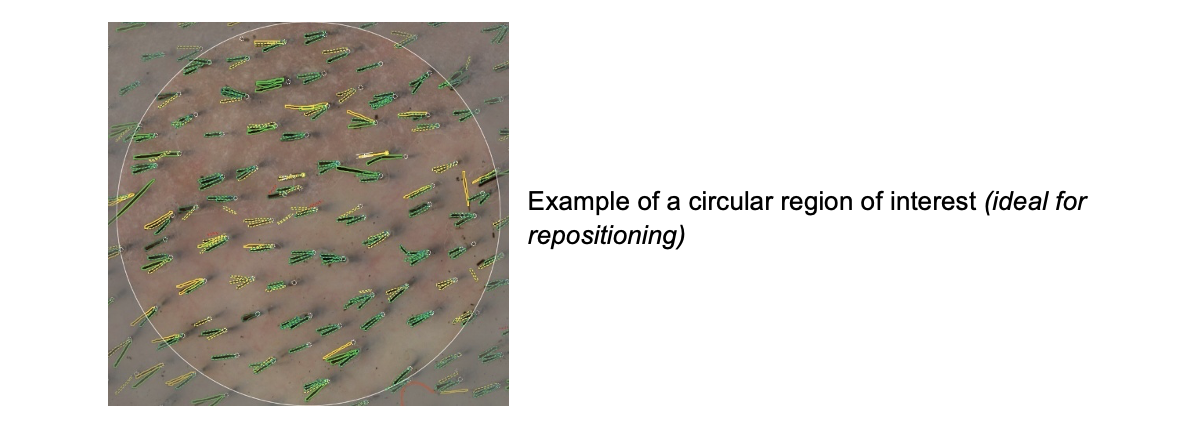
The software also offers the possibility of defining custom regions of interest (ROIs), in circular or rectangular shapes. This feature allows analyses to be focused on a specific area of the image. This allows measurements to be carried out in a targeted and reproducible manner from visit to visit.
This approach not only reduces analysis time, but also limits the inter-operator variability often observed in manual methods.
Capillary segmentation: the driver of automation
One of the major developments in hair analysis today is based on the automatic segmentation of the hair in the image. Thanks to dedicated artificial intelligence algorithms, the software identifies each hair fiber individually and automatically distinguishes the hair.
This step forms the basis for many automated analyses. Once the hair has been segmented, the software can automatically extract various parameters such as density, diameter, length or even certain growth indicators.
This automation speeds up processing compared to traditional manual analysis while improving the reproducibility of results.
In order to maintain full control over the quality of the data, the user can check and correct the segmentation at any time . It is thus possible to add an undetected hair or to remove a false detection before the calculation of the parameters. This approach combines the advantages of automation with the expert validation essential for clinical studies.
Automated Measurement of Capillary Density
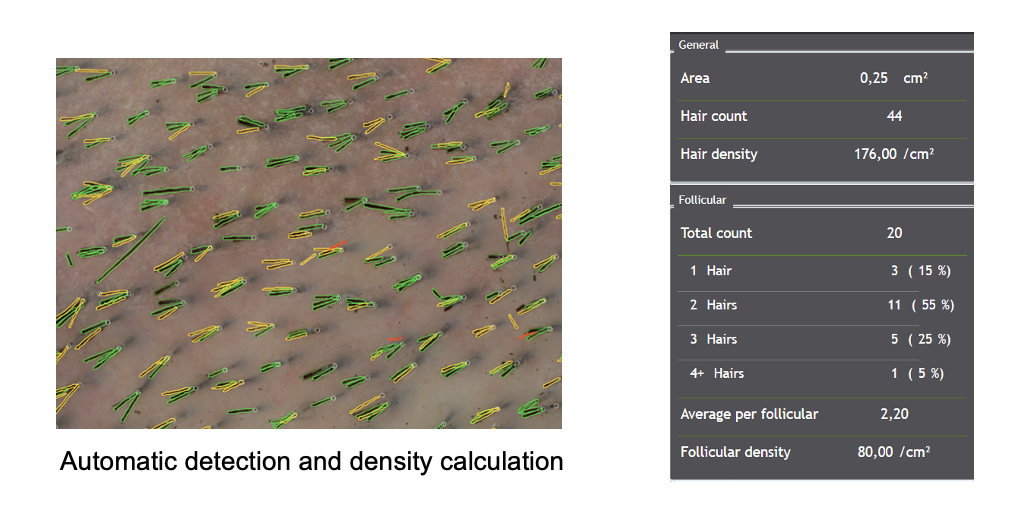
Hair density is one of the most widely used parameters in regrowth and anti-hair loss studies.
From the acquired images, the software automatically detects the follicles and determines:
- The total density of hair;
- Follicular density ;
- The distribution of single, double, triple or multiple follicles.
This information makes it possible to quickly obtain precise indicators of the evolution of the hair during a clinical study.
Hair diameter analysis
The thickness of the hair fiber is a key criterion for densifying, volumizing or strengthening products.
Traditionally carried out manually, this measurement can be particularly time-consuming when several hundred hairs need to be analyzed.
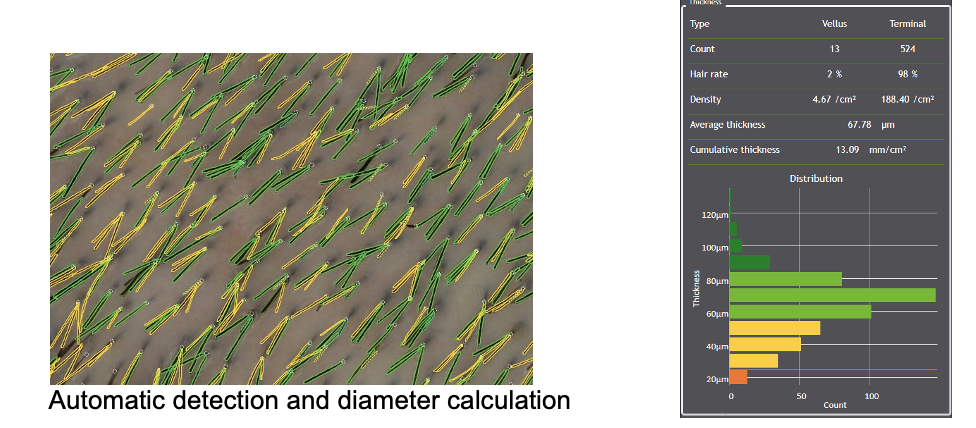
The latest developments in Clinical Research software now make it possible to automate the calculation of capillary diameter on the full image. This automation significantly reduces the time required for analysis while improving the reproducibility of results.
The software provides, in particular:
- The average diameter;
- The distribution of diameters;
- The distinction between terminal hair and vellus.
Analyses possible without prior mowing
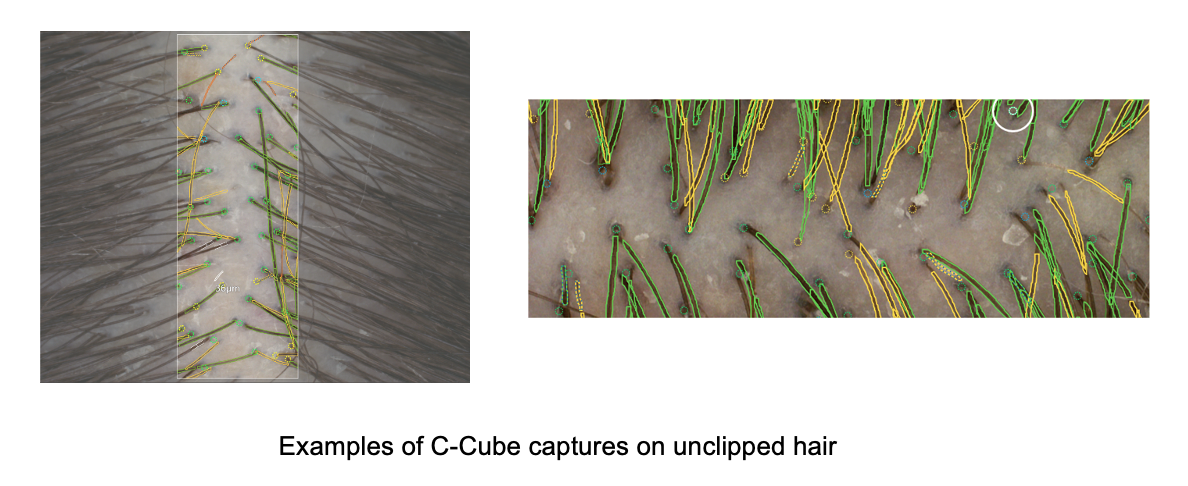
Some studies require measurements to be carried out on shorn areas in order to facilitate the monitoring of individual hair over time. However, this approach is not always compatible with the expectations of the volunteers.
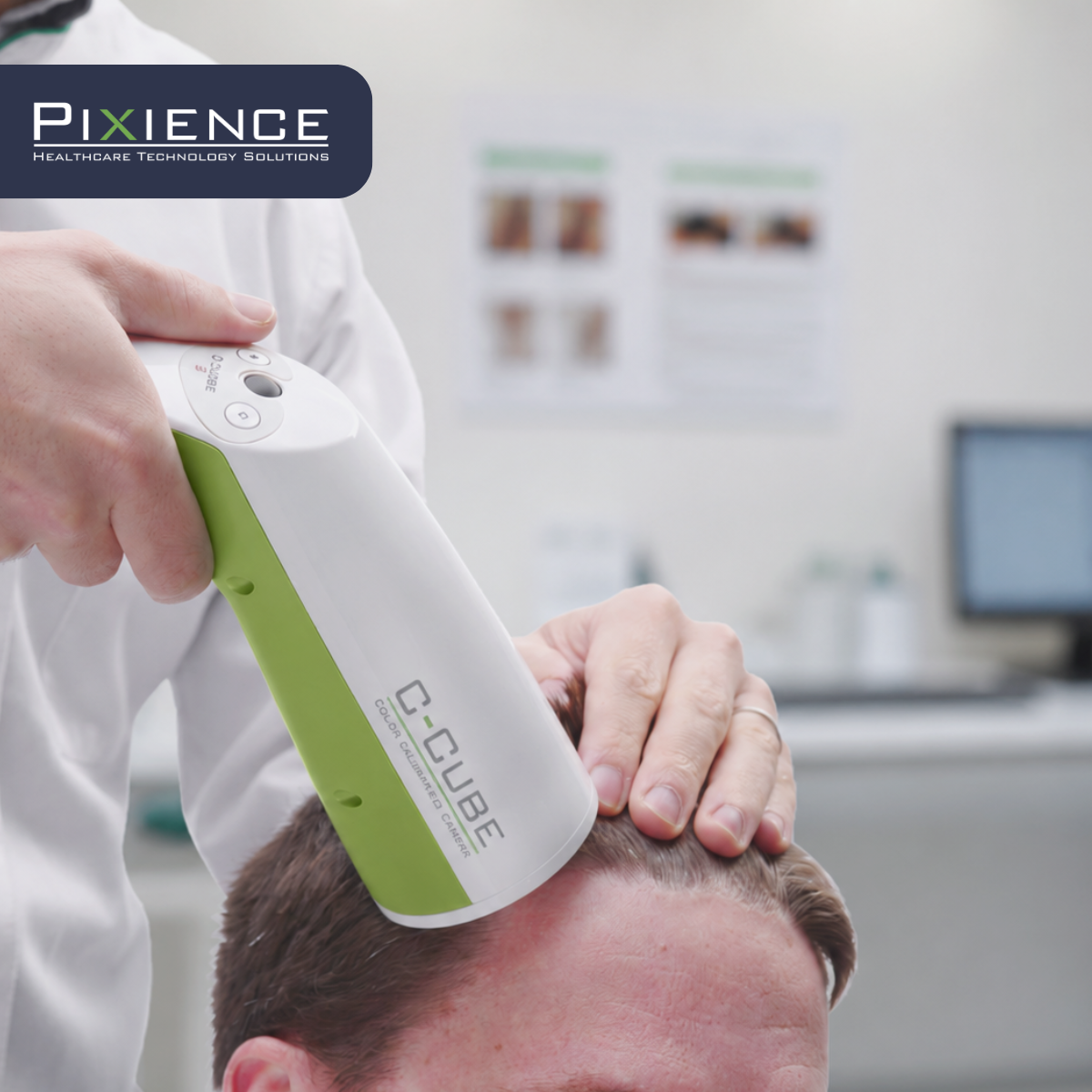
The C-Cube can also be used to perform certain analyses on unshorn hair. By preparing a central parting and carefully plating the hair, it becomes possible to obtain reproducible measurements of hair density and diameter without the need for clipping.
This approach provides greater flexibility in the design of studies.
Quantification of hair growth
The assessment of growth is usually based on the performance of phototrichograms.
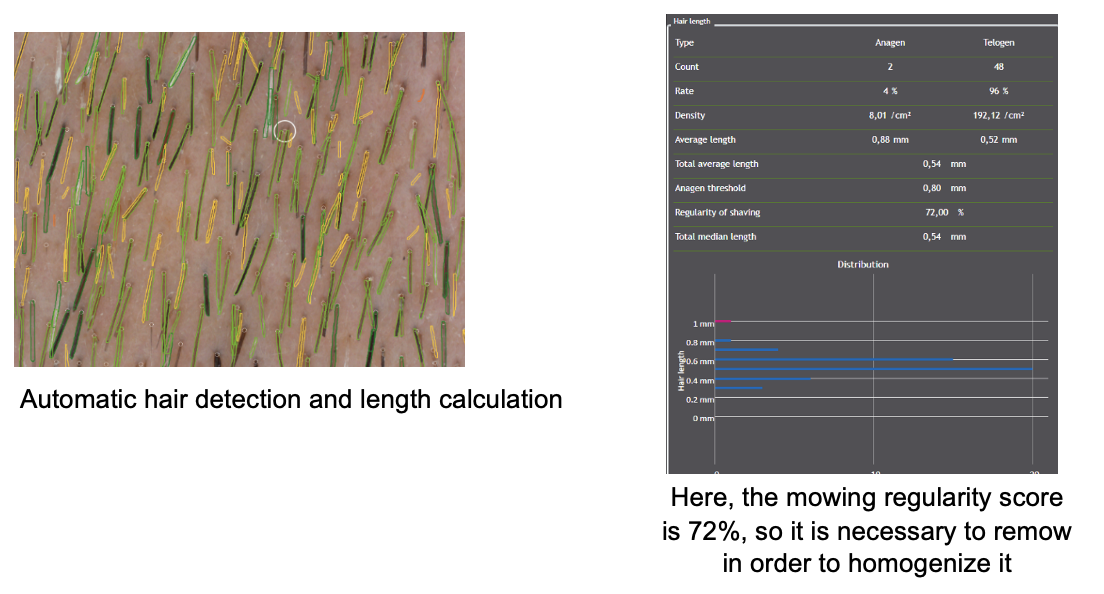
After shearing of the study area and controlled regrowth time, the software allows you to measure the average length of the hair as well as various indicators associated with its growth cycle (Anagen and Telogen).
However, the quality of the initial mowing is a decisive factor in guaranteeing the reliability of the results. Irregular mowing can introduce a bias in the regrowth estimate. To support operators, the software calculates a mowing homogeneity index to verify that the preparation of the study area is sufficiently uniform before analysis. This quality control helps to secure protocols and improve the reproducibility of growth measurements
These measures are particularly suitable for studies on active ingredients that stimulate hair growth or limit hair loss.
THE C-CUBE IN A RANDOMIZED CLINICAL STUDY:
The use of the C-Cube for hair evaluation was recently documented in a randomized, placebo-controlled clinical study conducted for 84 days in women with a tendency to hair loss.
The C-Cube was used to quantify three key parameters of the phototrichogram: hair density, hair diameter and anagen/telogen ratio.
Reeber A. et al. “A 2% Oleosome-FGF-2 Fusion Extract Scalp Serum Improves Phototrichogram-Derived Hair Density, Anagen/Telogen Ratio, Hair Shaft Thickness, and Scalp Barrier Parameters in Women with Shedding-Prone Hair: A Randomized, Single-Blind, Placebo-Controlled Pilot Study.” Preprint, 2026. Non-peer-reviewed.
Assess hair color accurately
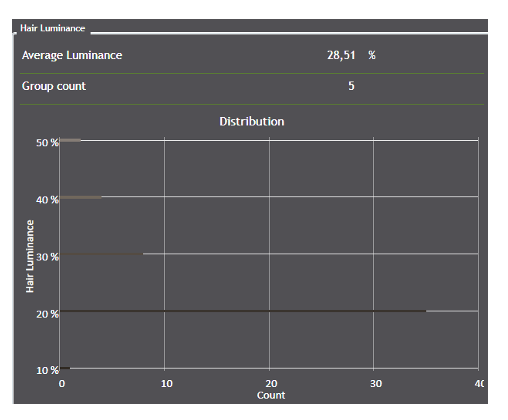
Beyond growth and density, many studies also look at the evolution of hair color.
Thanks to its colorimetric calibration system, the C-Cube allows you to objectively analyze hair color in the CIE L*a*b* color space.
This approach can be used to document the evolution of a dye or the coverage of grey hair.
A new approach to scalp analysis
Hair evaluation is no longer limited to the hair itself. The scalp is now a major area of innovation for brands.
The C-Cube thus makes it possible to quantify various parameters related to its physiological state.
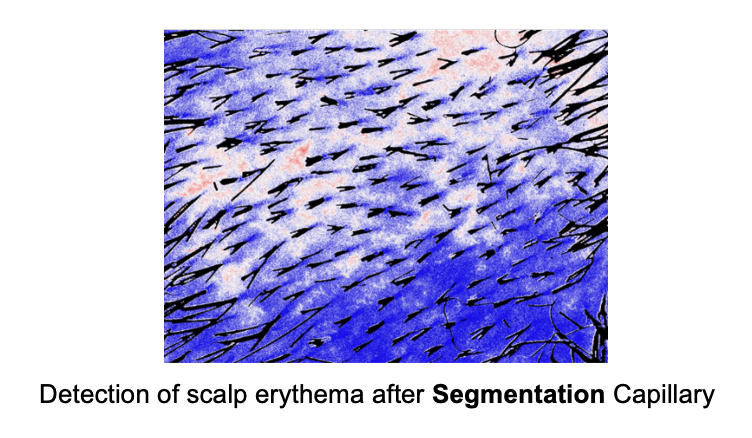
The erythema index makes it possible to objectively quantify the redness of the scalp. Thanks to segmentation algorithms, the analysis is carried out without interference from the hair present in the image.
This feature is particularly relevant for the evaluation of products intended for sensitive or redness-prone scalps.
Desquamation and sebum: standardized ex vivo measurements
To complement the in vivo analysis, the system can be combined with a dedicated reader to analyze samples taken from the scalp.
The analysis of D-Squame® or Corneofix® patches makes it possible to quantify desquamation and evaluate the effectiveness of anti-dandruff or soothing products.
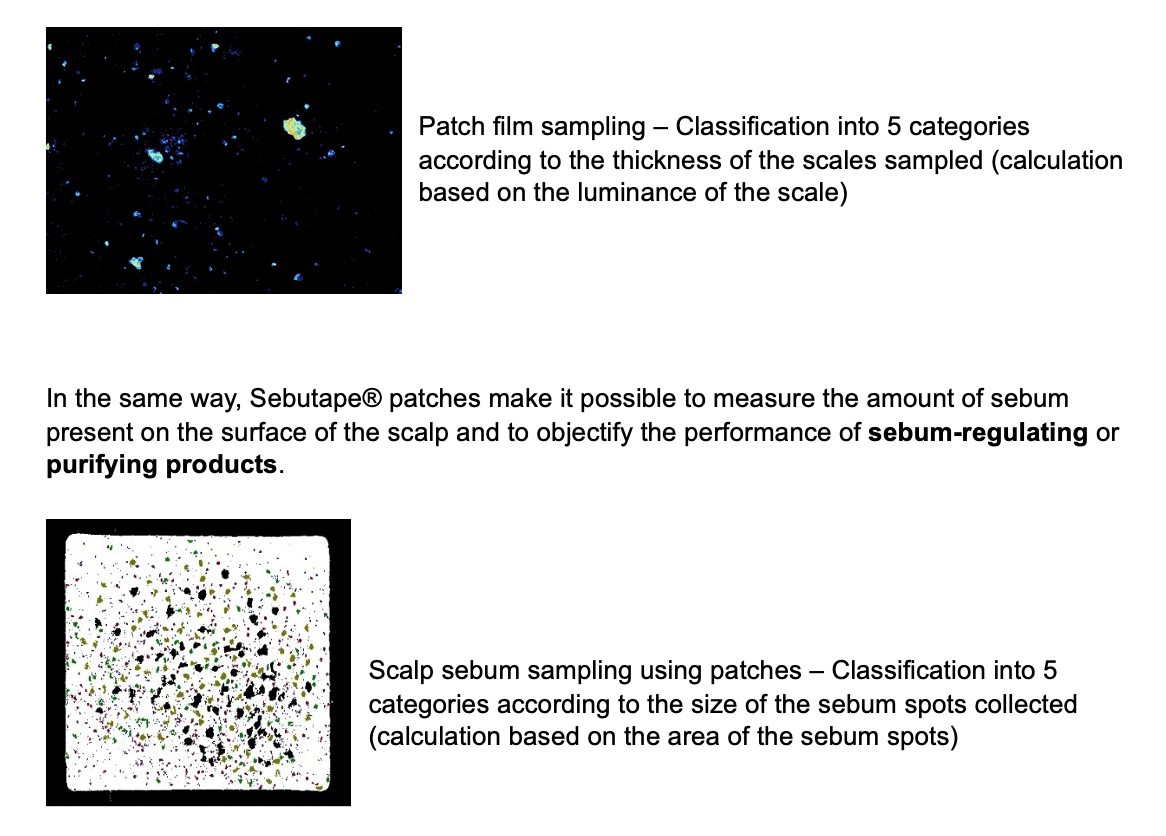
Scalp sebum sampling using patches – Classification into 5 categories according to the size of the sebum spots collected (calculation based on the area of the sebum spots)
| Application | C-Cube Parameters |
| Anti-Hair Loss / Regrowth | Density, anagen/telogen ratio, growth |
| Densifying / Strengthening | Diameter, diameter distribution |
| Coloring | CIE L*a*b*, white hair cover |
| Sensitive scalp | Erythema |
| Anti-dandruff | Patch Peeling |
| Seboregulation | Sebum on Sebutape® |
Towards a more efficient capillary assessment
From the hair fiber to the scalp, a single platform makes it possible to document different mechanisms of action and claims: anti-hair loss, density, fortification, growth, coloring, sensitive scalp, anti-dandruff or sebum.
By automating part of the analyses while maintaining the possibility of validation by the operator, the C-Cube Clinical Research aims to reduce analysis time and further standardize longitudinal evaluations.
CONTACT
Pixience
Sébastien Mangeruca
CEO
sales@pixience.comhttps://www.pixience.com/c-cube-recherche-clinique/