Skin hydration remains one of the major axes of dermocosmetic evaluation. Whether it is moisturizing, restorative or soothing treatments, the demonstration of effectiveness has historically relied on instrumental measures such as corneometry or insensible water loss (TEWL).
Today, expectations are changing. Beyond biophysical values, brands also want to objectify the visible consequences of hydration on the skin: smoother texture, reduced scales, improved skin comfort or surface homogeneity.
In this context, clinical imaging provides an essential complementary dimension.
Hydration: a visual perception
Dehydrated skin does not only result in a decrease in the water level measured by a catheter. It is also accompanied by visible changes:
• Increased roughness ,
• Appearance of scales,
• Loss of radiance,
• Redness related to an alteration of the skin barrier.
These manifestations have a direct influence on consumer perception. This is why standardized visual analysis is becoming an important issue in efficacy studies.
The goal is no longer just to demonstrate that a product moisturizes, but also to show how this hydration concretely improves the appearance of the skin.
The C-Cube: a complementary approach for skin hydration
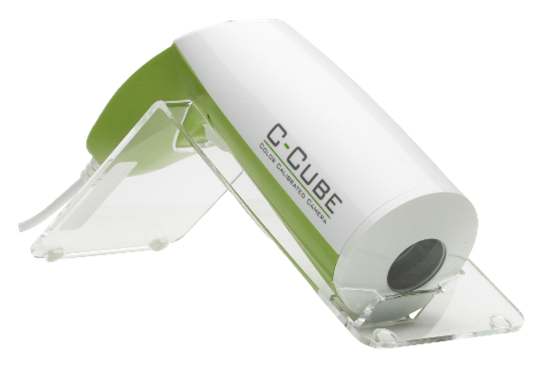
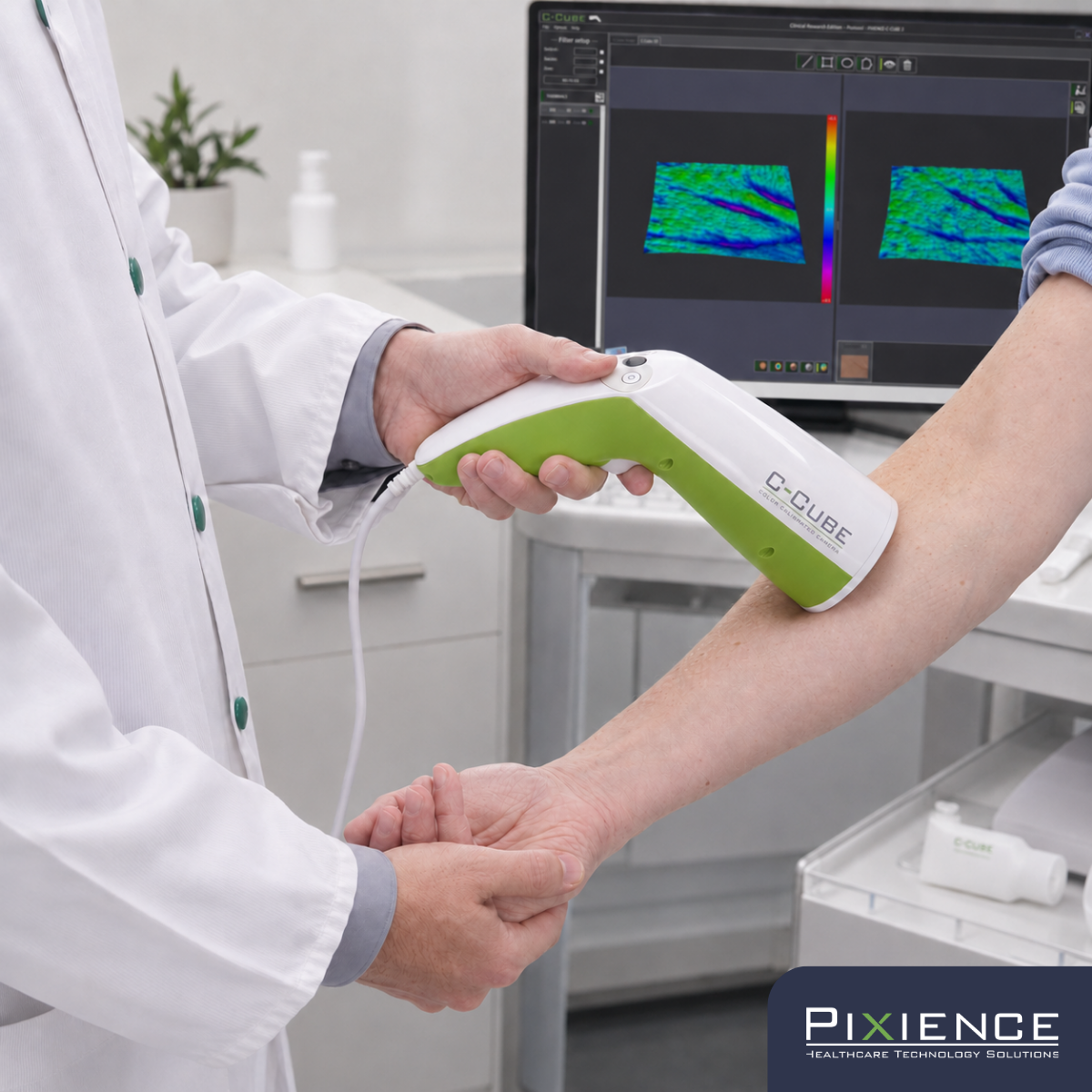
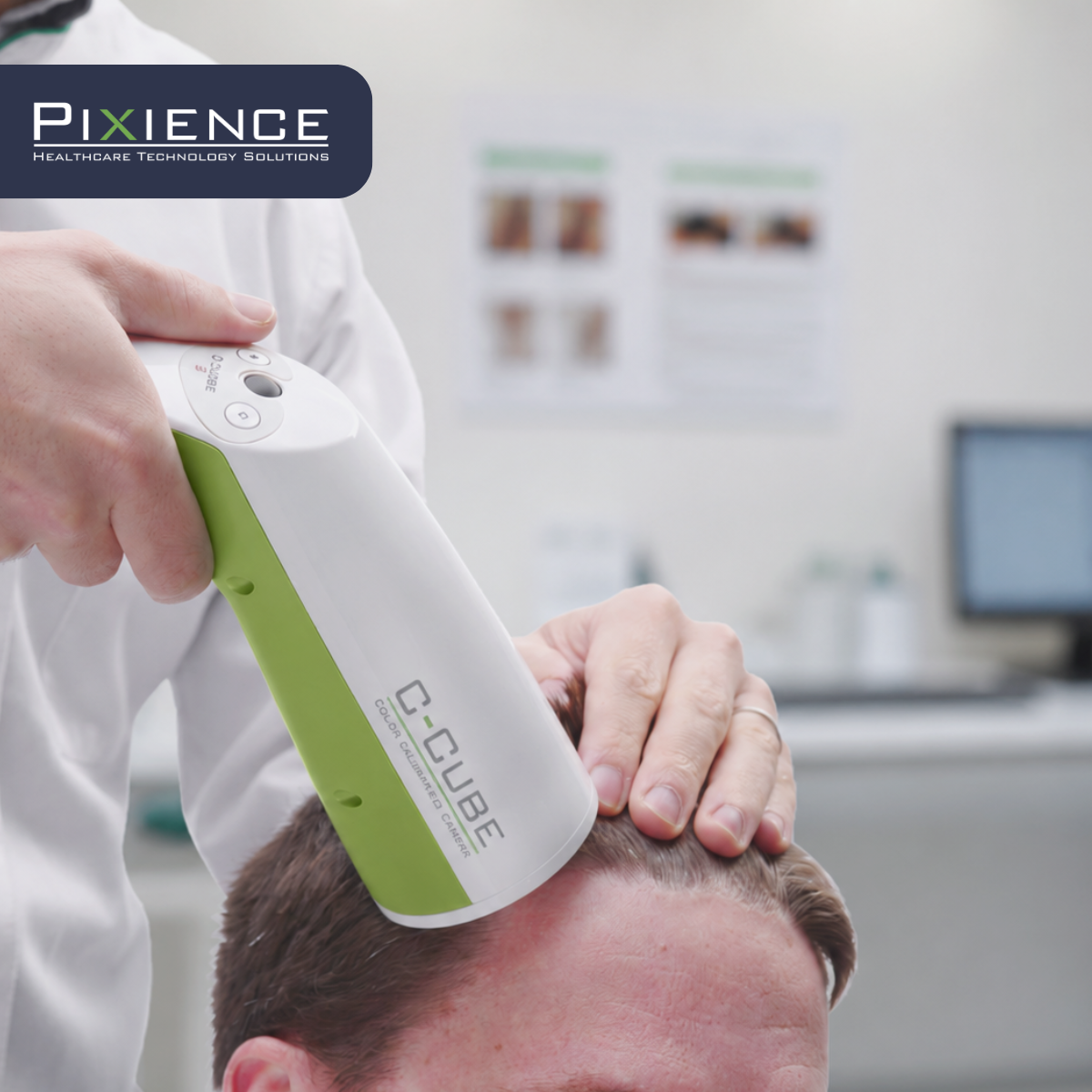
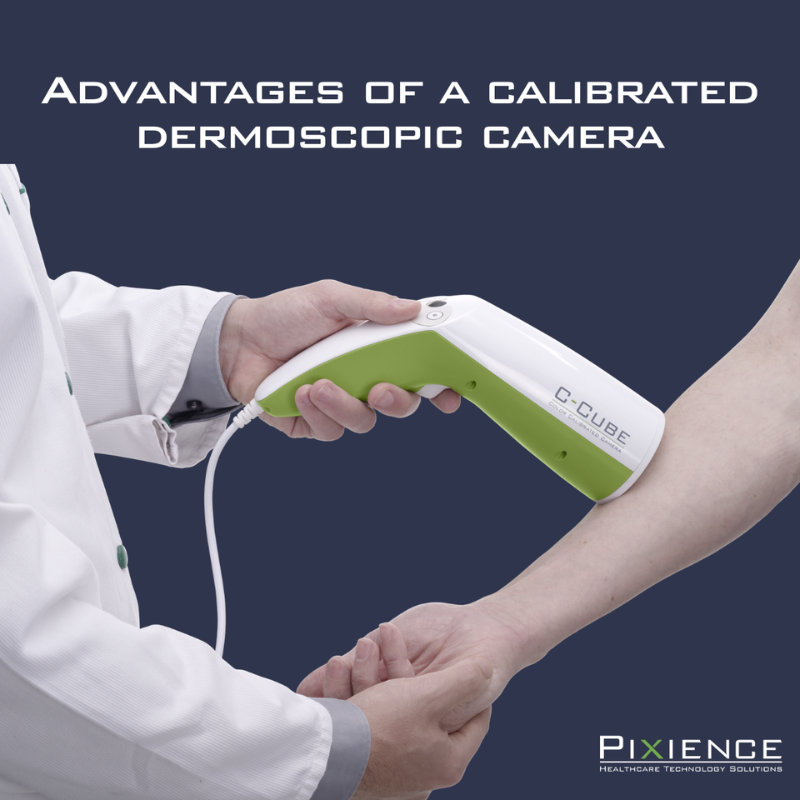
The C-Cube Clinical Research is part of this logic by allowing to analyze the visual consequences of the skin’s hydration state.
Thanks to its standardized imaging, the C-Cube evaluates various parameters that visually reflect the skin’s moisture state.
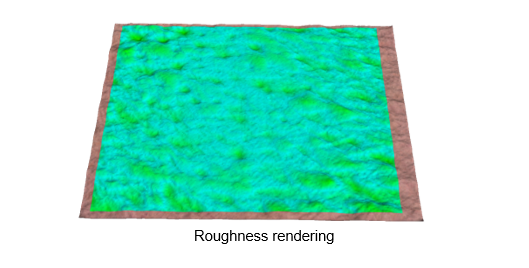
Surface roughness: a key indicator
One of the first visible signs of dehydrated skin is an increase in surface roughness. Impaired hydration often results in a more uneven skin surface, with more pronounced contours and a less smooth skin feeling.
Thanks to its 3D analysis by stereophotometry, the C-Cube makes it possible to reconstruct the skin surface and extract parameters from the ISO 25178 standard: Sa (average roughness), Sq, Sdr.
Improved hydration often results in less roughness and a more even surface.
This data helps support claims such as: “smoothes the skin”, “improves skin texture”, “reduces surface irregularities”.
Visible flaking and dryness
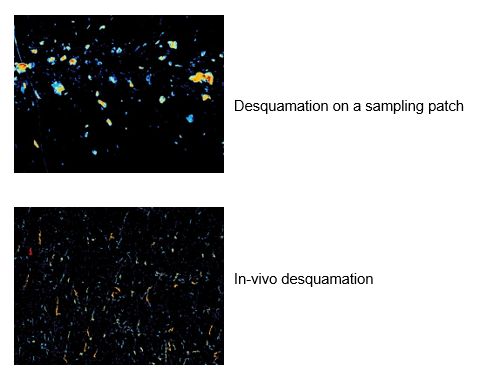
The C-Cube also allows the analysis of desquamation, as well as:
• Ex vivo, via sampling patches,
• In vivo, directly on the image.
The quantification of dander is a particularly relevant indicator in studies on:
• Dry skin,
• Nourishing care,
• Skin barrier repair products.
The evolution of desquamation can thus be correlated with the improvement in skin comfort observed by the volunteers.
Microrelief sharpness: a visual marker of skin dryness
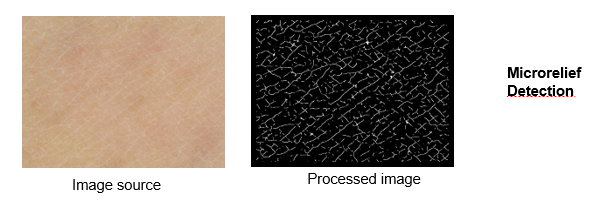
The skin’s hydration status strongly influences the appearance of the skin’s microrelief. On well-hydrated skin, the furrows generally appear less marked and more homogeneous. Conversely, dry skin often has more visible reliefs, linked to the accumulation of scales in and around the skin folds.
To objectify this phenomenon, the C-Cube uses a line detection algorithm to identify the grooves visible in the image. The analysis is based on two complementary criteria:
• The sharpness and visibility of the detected grooves,
• The colorimetric difference between the furrows and the surrounding skin.
The greater the contrast, the more pronounced the microrelief appears. The combination of these two estimates thus makes it possible to generate an index of the sharpness of the microrelief.
This parameter provides a particularly relevant reading of the effects of moisturizing or repairing treatments, in addition to the classic roughness or flaking measurements.
Hydration and radiance: objectify the skin’s luminosity
The skin’s hydration status directly influences its ability to reflect light. Dehydrated skin often appears duller, less homogeneous and less luminous.
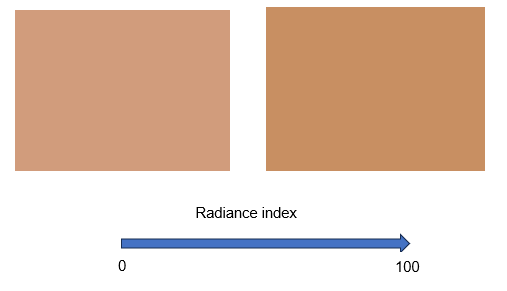
To objectify this effect, the C-Cube allows you to calculate a radiance index based on the L* color component, corresponding to the brightness in the CIE Lab* color space.
Thanks to its calibrated and homogeneous imaging, the system analyzes the variations in luminosity on the skin surface in order to evaluate the evolution of the skin’s radiance during a protocol.
This approach supports claims such as:
• “restores radiance”,
• “brighter skin”,
• “fresher and even complexion”.
In addition to traditional biophysical measurements, this analysis provides a visual and quantitative reading that is particularly relevant in studies dedicated to hydration and overall skin quality.
Actionable visuals for proof of effectiveness
Beyond numerical values, imaging also plays an important role in the valorization of results.
3D mapping, texture renderings, visualization of scales or before/after comparisons allows to generate visual evidence that can be directly used in:
• Clinical reports,
• Scientific presentations,
• Marketing materials.
This approach responds to a growing market expectation: to combine objective data with clear visual demonstration.
Towards a new generation of skin hydration assessment
The evaluation of hydration can no longer be limited to a single biophysical measurement. The expectations of brands and consumers are evolving towards a more comprehensive understanding of the visible effects of skincare on skin quality.
Beyond the barrier function, the challenge now is now to also objectify the texture, radiance, homogeneity and visible manifestations of skin dryness.
By providing a morphological, quantitative and visual reading of these phenomena, the C-Cube Clinical Research complements traditional instrumental approaches and paves the way for a more intuitive, more illustrated demonstration of effectiveness that is closer to the real perception of consumers.
Clinical imaging thus becomes a central tool in modern dermocosmetic evaluation protocols, at the crossroads of scientific measurement and visual evidence.
Contact and Editorial
Sébastien MANGERUCA
CEO
sales@pixience.com
https://www.pixience.com/en/c-cube-cr/